
· The Nodly team
When a neck massager earns its place
We sell one, so take the framing rather than the conclusion. The arithmetic below is the one we would do ourselves, and it turns on a single number that most comparisons leave out.
The comparison people actually make
It is rarely against another device. It is against booking a session with someone, or against doing nothing. Both deserve a straight comparison.
| A device at home | A course of appointments | Doing nothing | |
|---|---|---|---|
| Quality per session | Lower | Higher — a trained pair of hands finds things | — |
| Cost per session after purchase | A charge | The price of the session | Nothing |
| Availability | Immediately, including twice in a day | When there is an appointment | — |
| Effort per session | Sit down and put it on | Travel there and back | None |
| Suits | Something recurring | Something specific, or something you cannot reach | Something that is settling on its own |
Read across the middle row and the case makes itself. A device is a worse intervention that happens far more often, for nothing, for years. If the problem is a recurring contraction, more-often beats better-per-session, and it is not close.
When the question belongs to someone else
One boundary is worth drawing before any of the arithmetic. Pain that is sharp, that radiates down an arm, that comes with pins and needles or weakness in a hand, or that follows a fall or an accident, is a question for a clinician. A device works on muscle, and it has no way of telling muscle from anything else. The manual supplied with ours states plainly that it is a personal care item and cannot replace medication or medical equipment. The full list is in the safety guide.
The factor that decides it
Not the mechanism, and not the price: whether you will still be reaching for it in six weeks. That is decided by a handful of design choices, and it is the reason the same money spent on two different devices produces completely different outcomes.
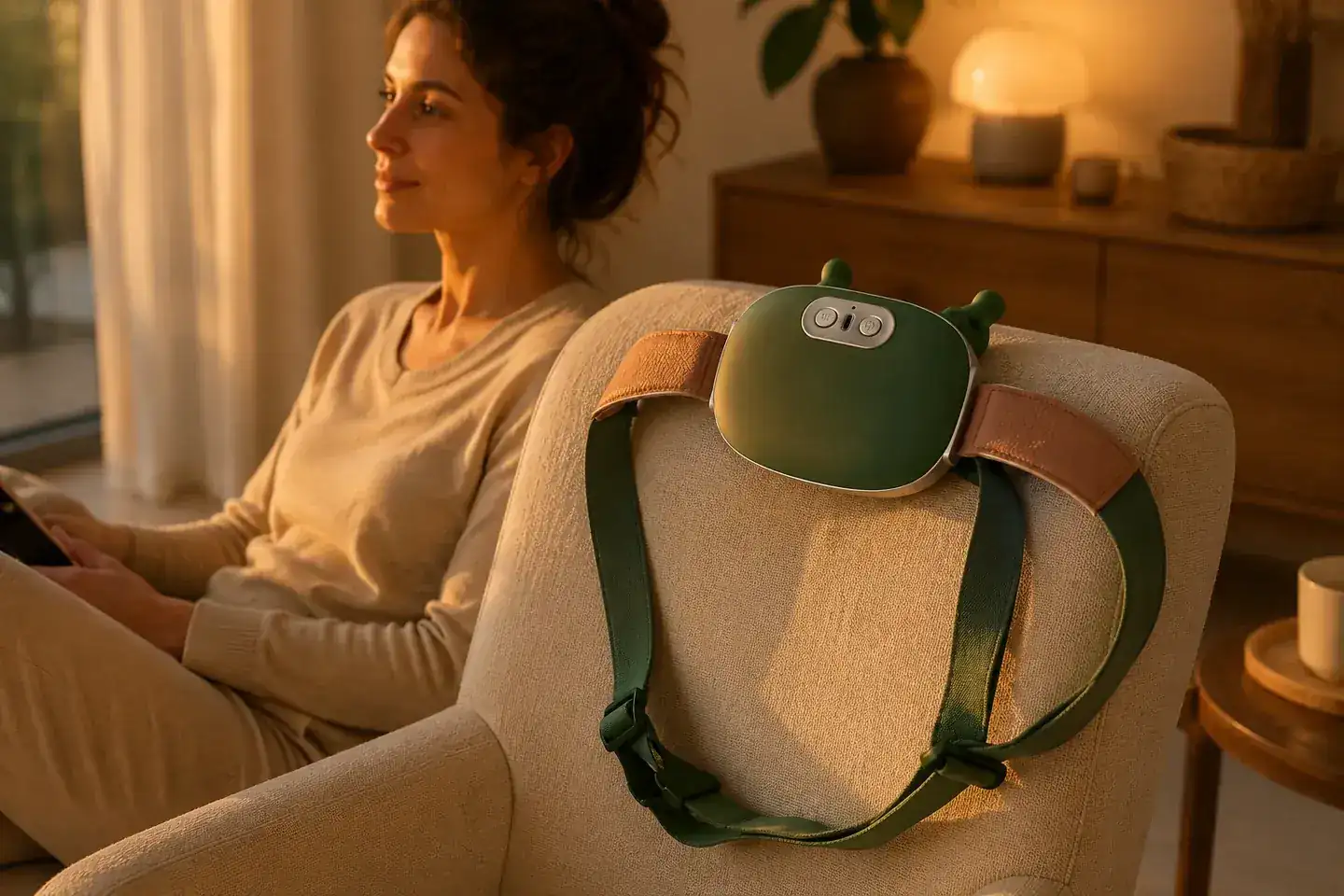
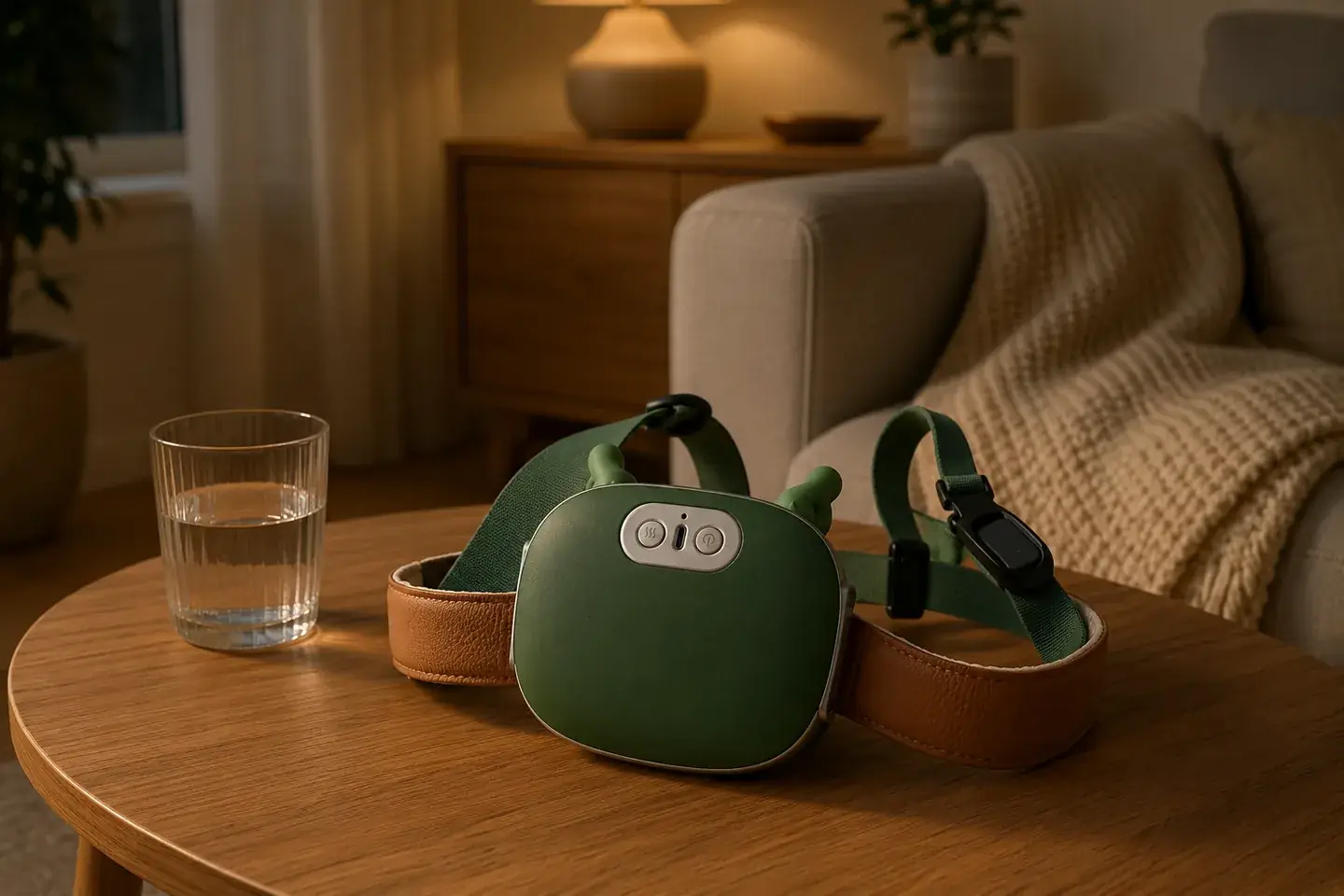
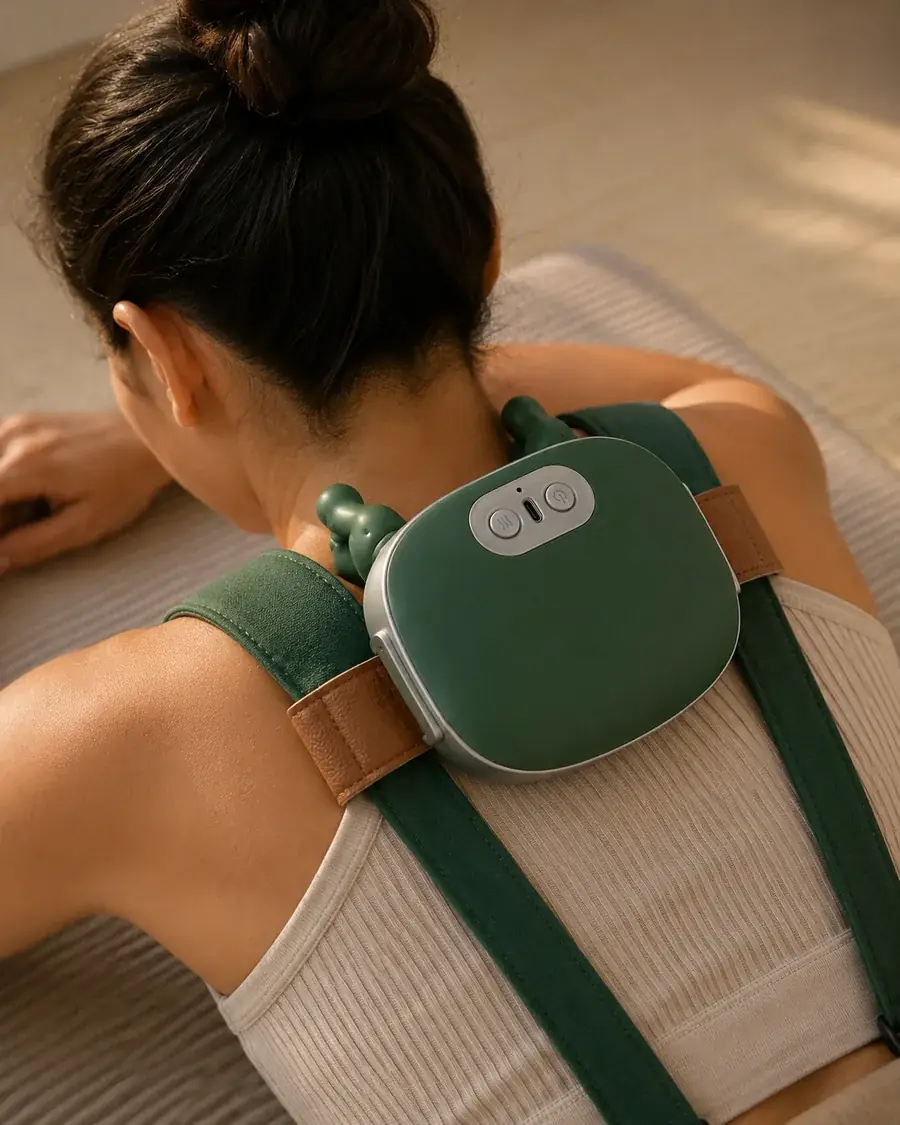
Hands free is the big one. A device you hold makes your arm perform the static work that tightened your shoulders, so a ten-minute session is ten minutes of the cause. No cable is the second: a device that plugs in gets used in the room with the socket. Reach past the neck is the third, because more reasons to pick it up means more sessions. The rest of the checklist is in how to choose a neck massager.
What you are actually buying
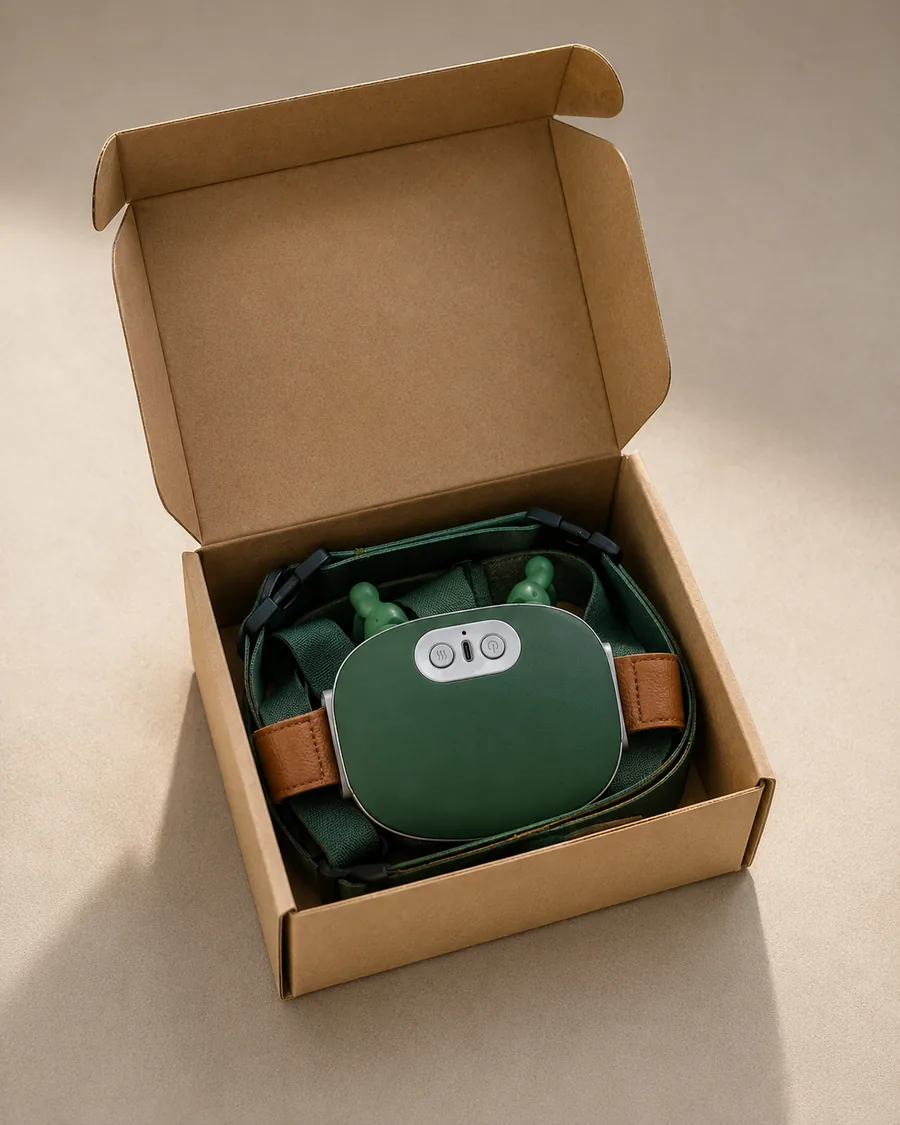
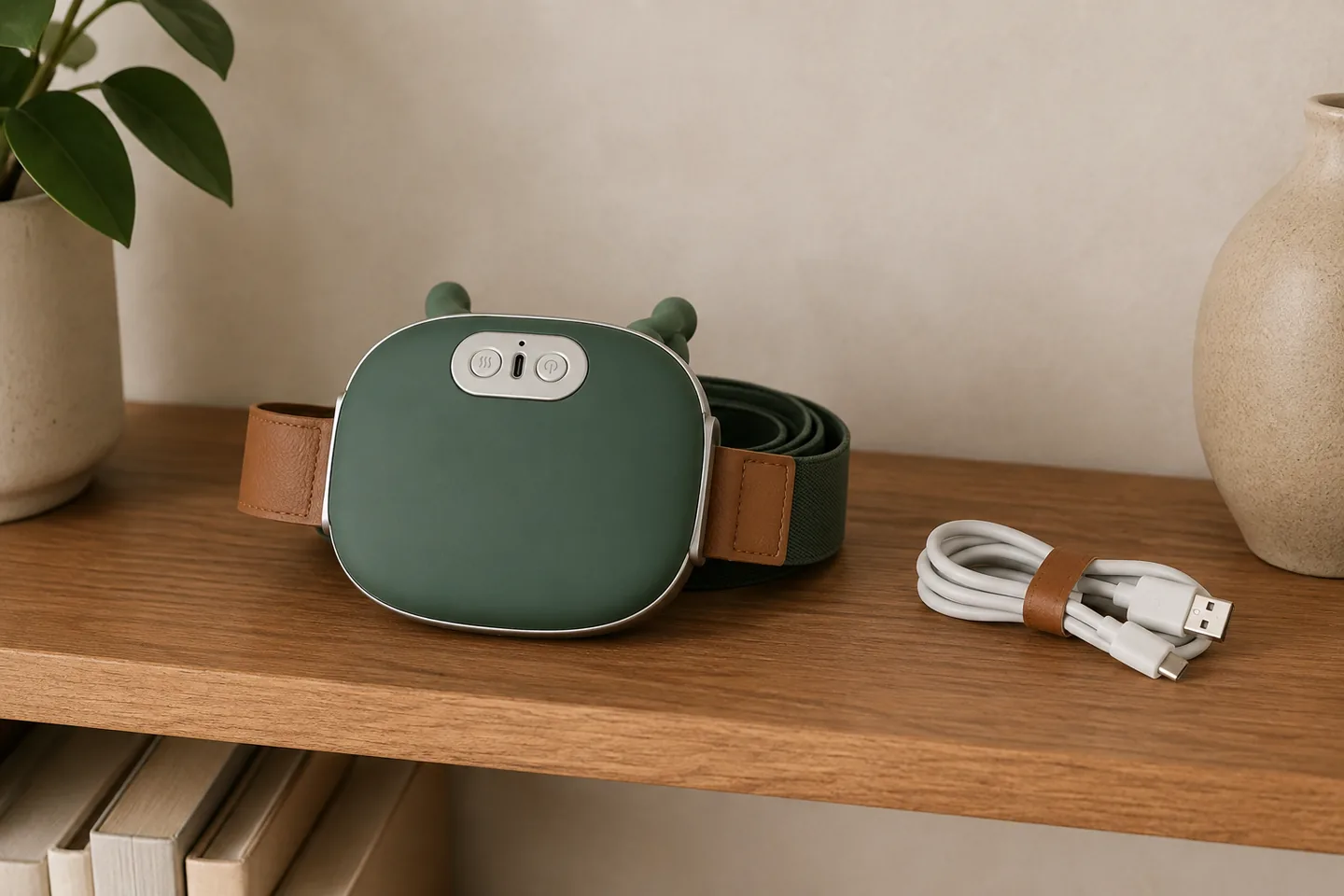
Ours: two hand-shaped heads with five food-grade silicone fingers each, three massage modes, two heat levels given in the manual as 42 °C (108 °F) and 45 °C (113 °F), a ten-minute session with automatic shut-off, a 2,000 mAh battery that charges in about three hours, 1.7 lb (760 g), and an adjustable strap that closes behind you. It reaches the neck, trapezius, shoulders, waist and calves. It does not reach the upper back, because the arms do not open wide enough outwards — a buyer reported that, and it is on the product page rather than in the small print.
It arrives with an empty battery, which is the most common surprise on opening the box. Every order carries thirty days to change your mind with return shipping on us, so the six-week question is testable rather than theoretical.
The scale, for what it is worth
If it helps to know you are not unusual: a 2022 cross-sectional study of 413 office workers found a twelve-month neck pain prevalence of 63.9%, and in Great Britain the Health and Safety Executive recorded 211,000 work-related musculoskeletal cases principally affecting the upper limbs or neck in 2024/25, out of 511,000 cases in total. This is one of the most common complaints there is, which is why the category is crowded and why the choice is worth ten minutes of thought rather than a click.