
Neck massage pillow or shoulder shawl: which shape does the work
If you searched for a pillow, you almost certainly want the same outcome as someone who searched for a shawl: firm kneading, on the neck and shoulders, without occupying your hands. The two shapes get there differently, and the difference shows up in where and how often you can actually use one.
Neck massage pillow and shoulder shawl, side by side
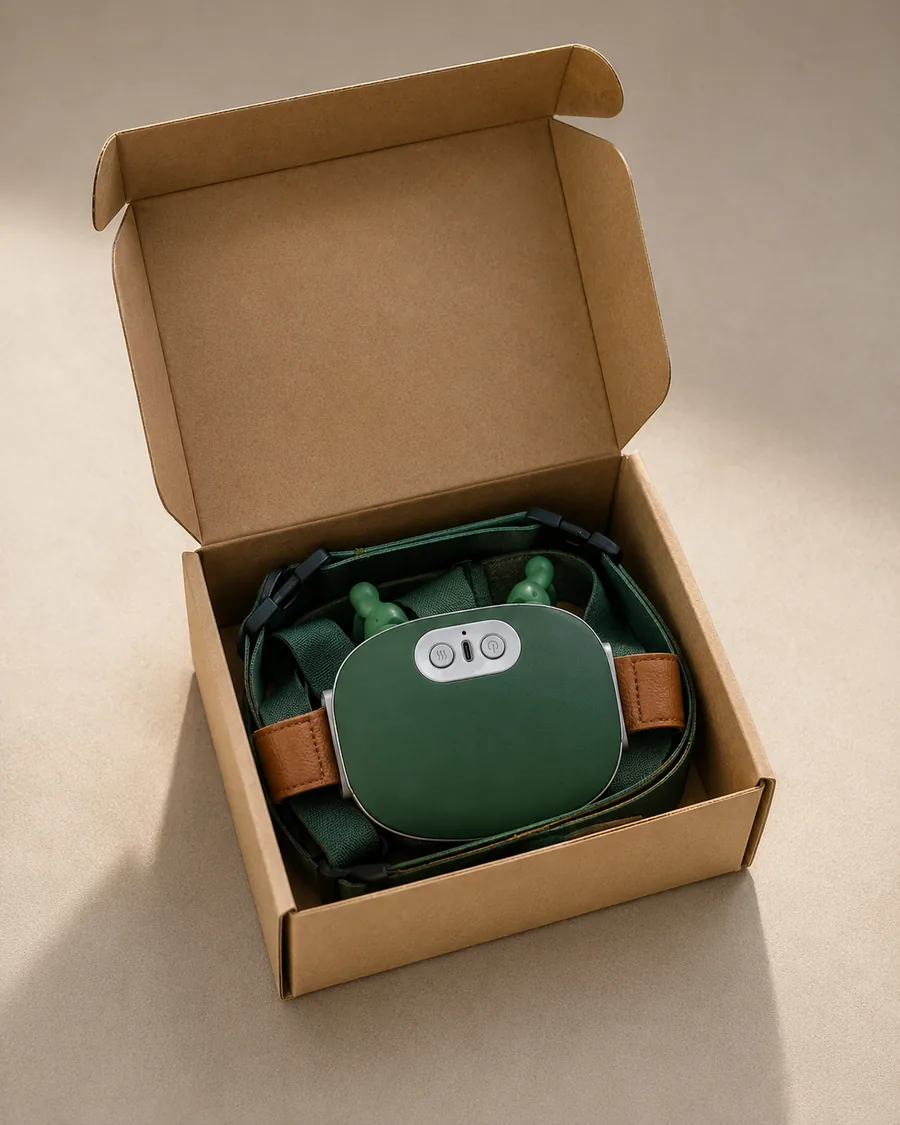
Three shapes cover almost everything sold for a stiff neck, and they answer three slightly different questions. It is worth being clear which question you are asking before comparing specifications, because a device that is right for one is unremarkable for the others.
| Shoulder shawl (ours) | Massage pillow | Vibrating collar | |
|---|---|---|---|
| Where the pressure comes from | How tightly the strap is buckled, plus three modes | Leaning back against it | Fixed by the design |
| What it needs around it | A chair, or nothing at all | A chair back or firm surface | Nothing |
| Zones it reaches | Neck, trapezius, shoulders, waist, calves | Wherever you can brace it | Neck |
| Hands free | Yes, resting on the shoulders | While seated against it | Yes |
| Contact points on the muscle | Ten fingers across two heads | Usually four nodes | None, the housing vibrates |
| Heat | Two settings, switchable | Usually one setting | Sometimes, usually fixed |
Why the strap changes what the device is for
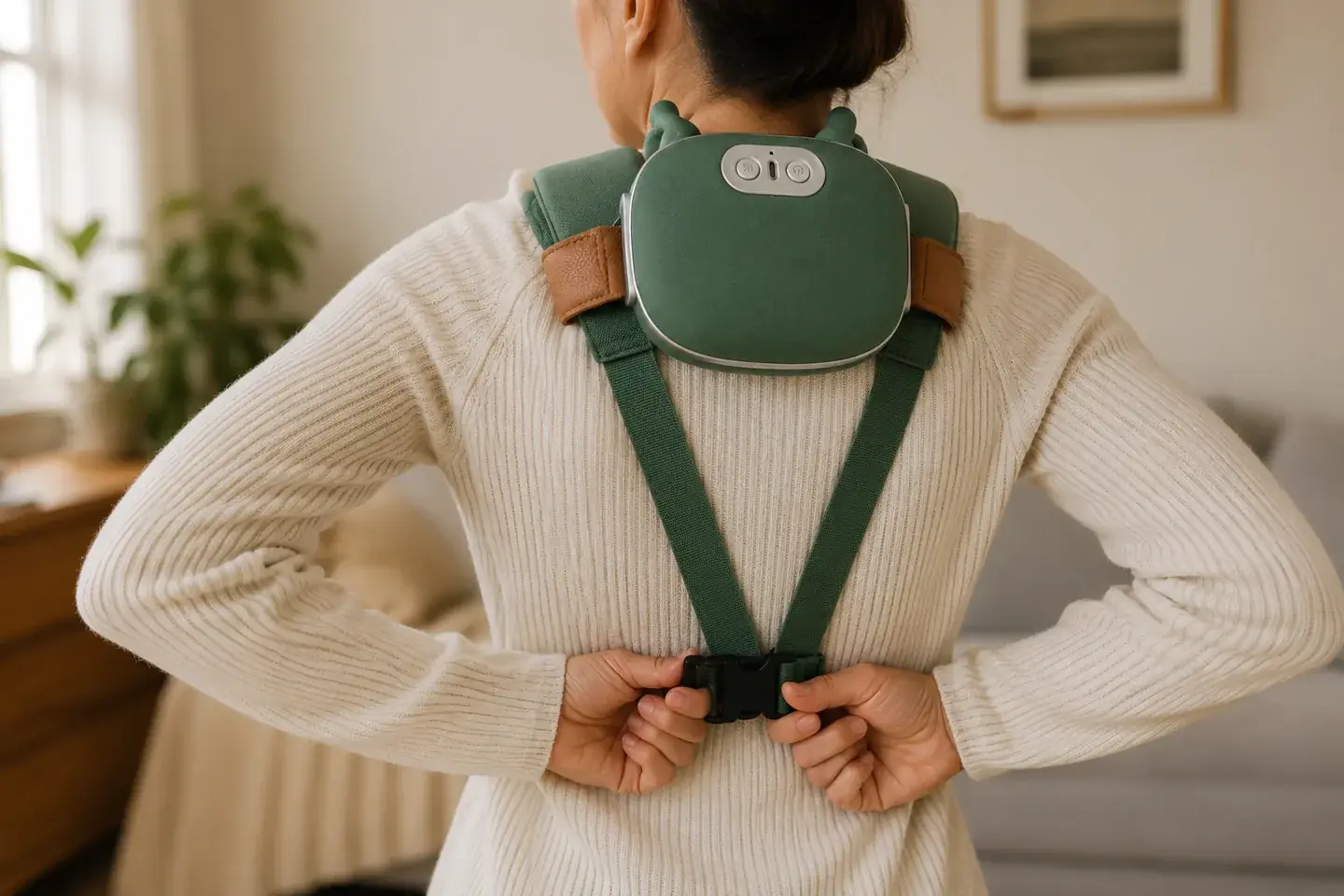
A rigid cushion has one geometry, and every session is a negotiation between that geometry and your body. It is a good arrangement when you are already sitting in the chair it was designed around. A strap has no fixed geometry at all: the heads go where you put them, and the pressure is whatever your hands are doing at that moment. This is the reason the same unit can be gentle for one person and deep for another without changing a single setting.
It also means the device follows you around the house rather than living on one chair. Ours is cordless, with a full charge in about three hours, so nothing tethers it to a socket either — which is the second half of the same argument and is covered on the cordless page.
Where a shoulder-worn device sits on you
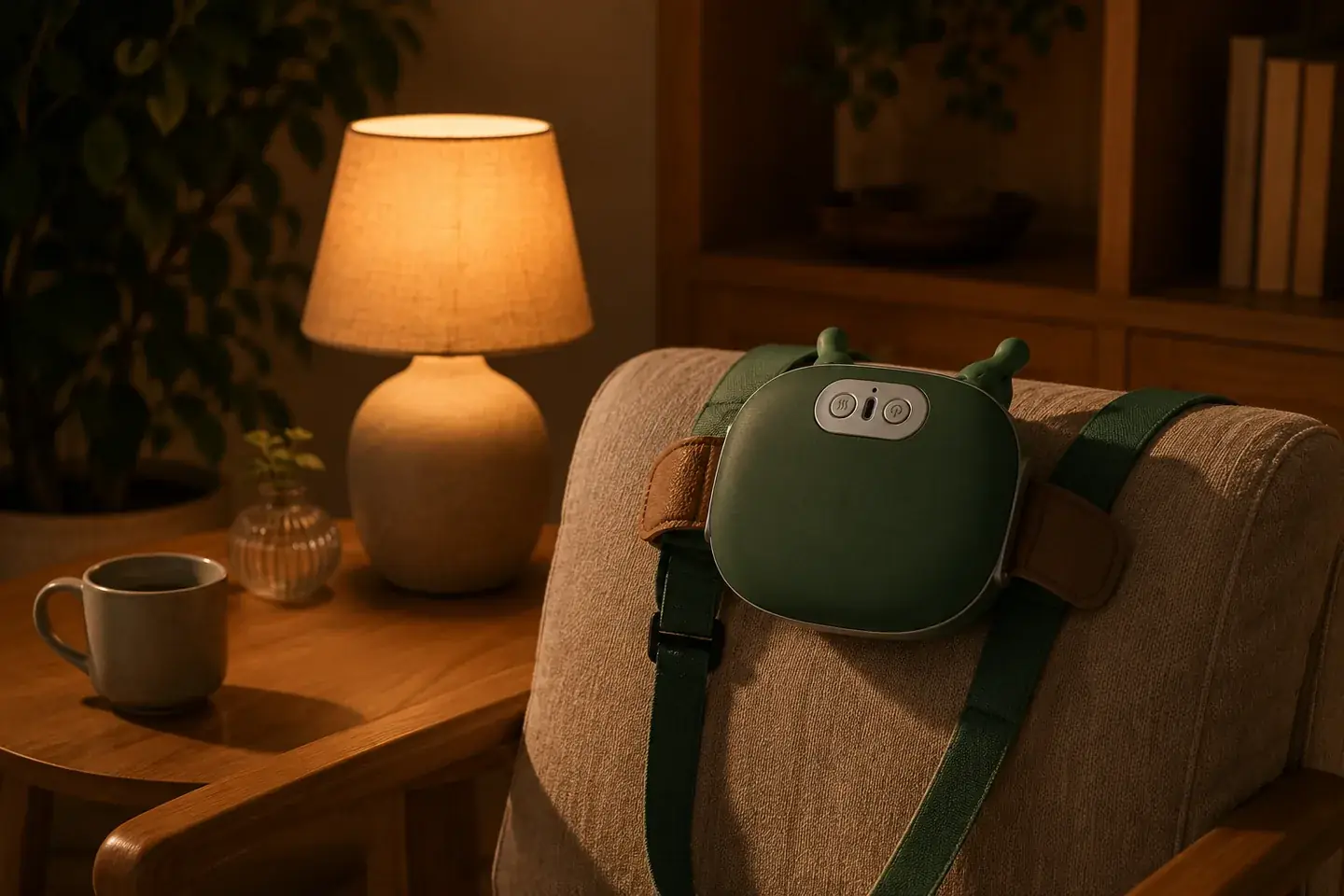
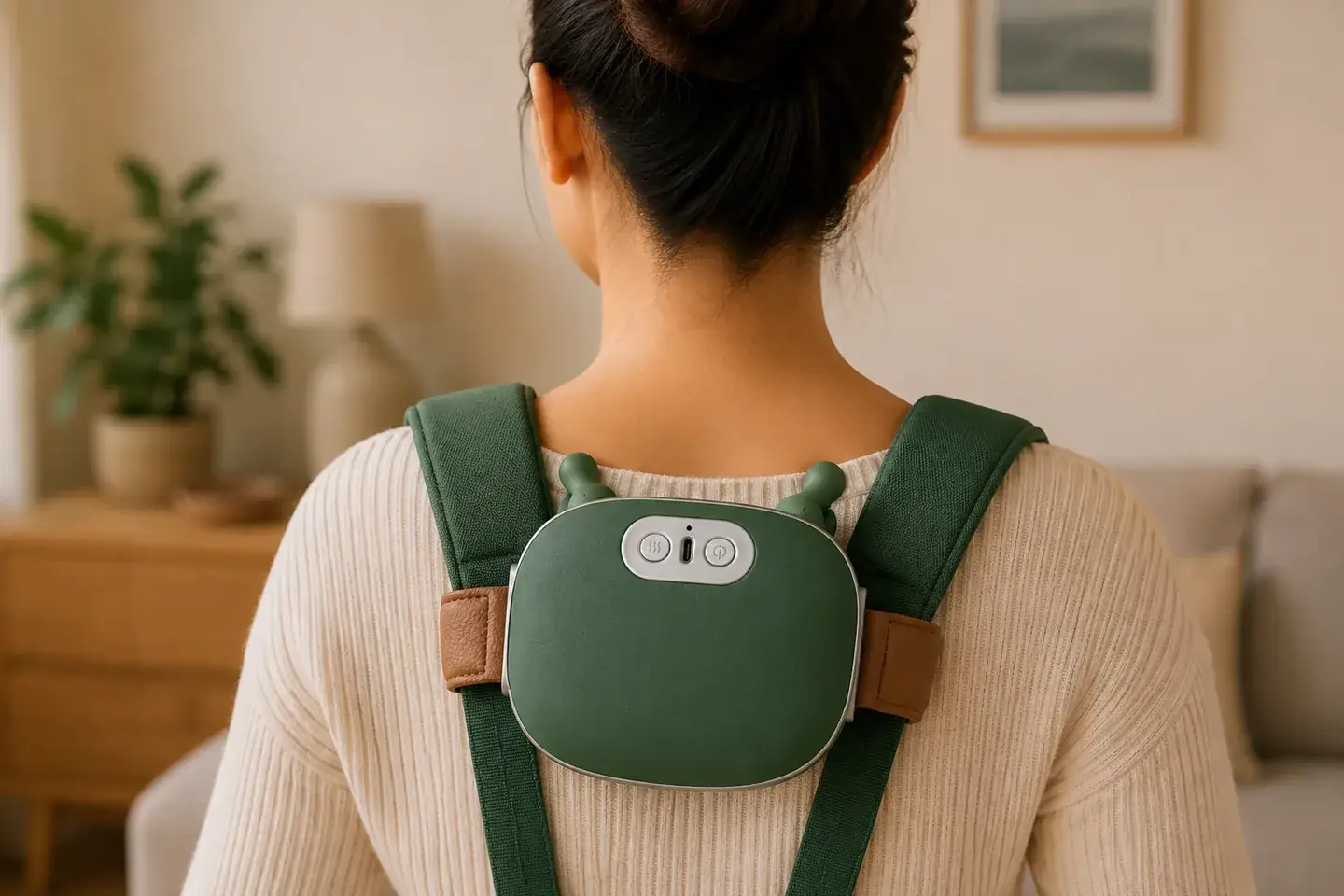
It rests over the shoulders with the two hands either side of the spine and the base of the neck between them, the fingers landing on muscle rather than on vertebrae. From there the trapezius is directly under the fingers, which is where most desk-related tightness actually lives — the band across the top of the shoulders rather than the neck itself. Buckle it tighter and the heads press in; leave it looser and they lighten. Most people find their setting within the first minute and stop thinking about it.
Moved down, the same arrangement works across the lower back and the waist, and wrapped around a calf it becomes something else entirely after a day standing. The full map of zones is on the product page, including the one zone it does not reach.
What people searching for a neck massage pillow usually want
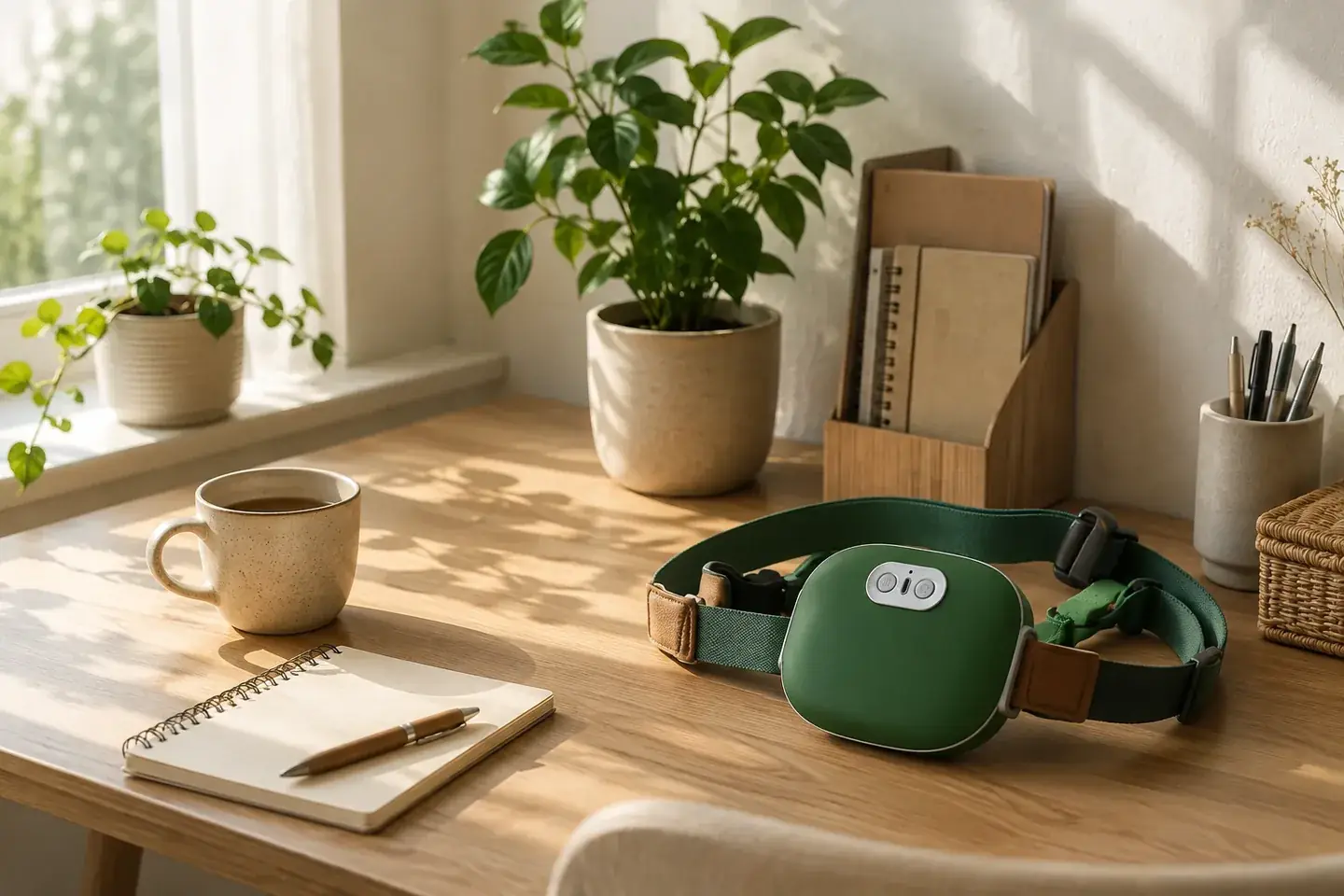
Reading the reviews across this category, the recurring wish is not for a particular shape. It is for firm pressure, without holding anything, in the fifteen minutes between getting home and making dinner. That is a description of a behavior, not a product category, and the device that satisfies it is whichever one is closest to hand at that moment and needs nothing set up.
By that measure the useful questions are how quickly it is on you, whether it needs anything else in the room, and whether the pressure lands where the tightness is. A shawl scores well on all three for the neck and shoulders, which is the region this whole category exists for.
First session, whether you end up with a neck massage pillow or a shawl
Sit down. Start on the lowest setting with the heat off, and stay there for a minute before adding either. A session runs ten minutes and stops on its own. In the first week, resist starting a second one straight away — one buyer advises fifteen to thirty minutes in total the first few times. Firm is the goal, sharp is not. Keep it off the front of the throat, off the spine itself, and off any area that is bruised, swollen or recently injured.
One more practical note that applies to every hands-free device: set the mode and the heat you want before you settle back, because reaching a button on something resting on your own neck means raising an arm. Our full first-week guidance is on the how often to use it guide.
Choosing a shape
What is the difference between a massage pillow and a massage shawl?
Where the pressure comes from. A pillow is a rigid cushion you press a body part against, so the force comes from leaning back into it and it needs a chair or a firm surface behind you. A shawl rests over the shoulders and the force comes from pulling its straps forward, which you can do sitting, standing or at a desk.
Can I use a shoulder massager lying down?
Sitting upright works best, because the straps need somewhere to pull towards. Lying back removes the tension you create with your hands and the heads rest against you rather than pressing into you. Most people settle on an armchair or a dining chair.
Does a shawl work on more than the neck?
Yes, and that is the practical argument for the shape. Because it is a strap rather than a fixed cushion, the same device moves down to the waist or wraps around a calf. Ours reaches the neck, trapezius, shoulders, waist and calves — the calves are not in any documentation we hold, they were confirmed in use.
Which shape is firmer?
The one you control. Fixed-position devices give you the pressure their design chose. A shawl gives you a continuous range from very light to firm, set by how far you pull, which is why the same unit suits someone with a slim neck and someone who wants it deep.