
· The Nodly team
How to choose a neck massager, in six questions
Almost everything in this category will do something to a tight neck for ten minutes. The question worth asking is a different one, and these six are how we would ask it.
1 · Does it press, or does it vibrate?
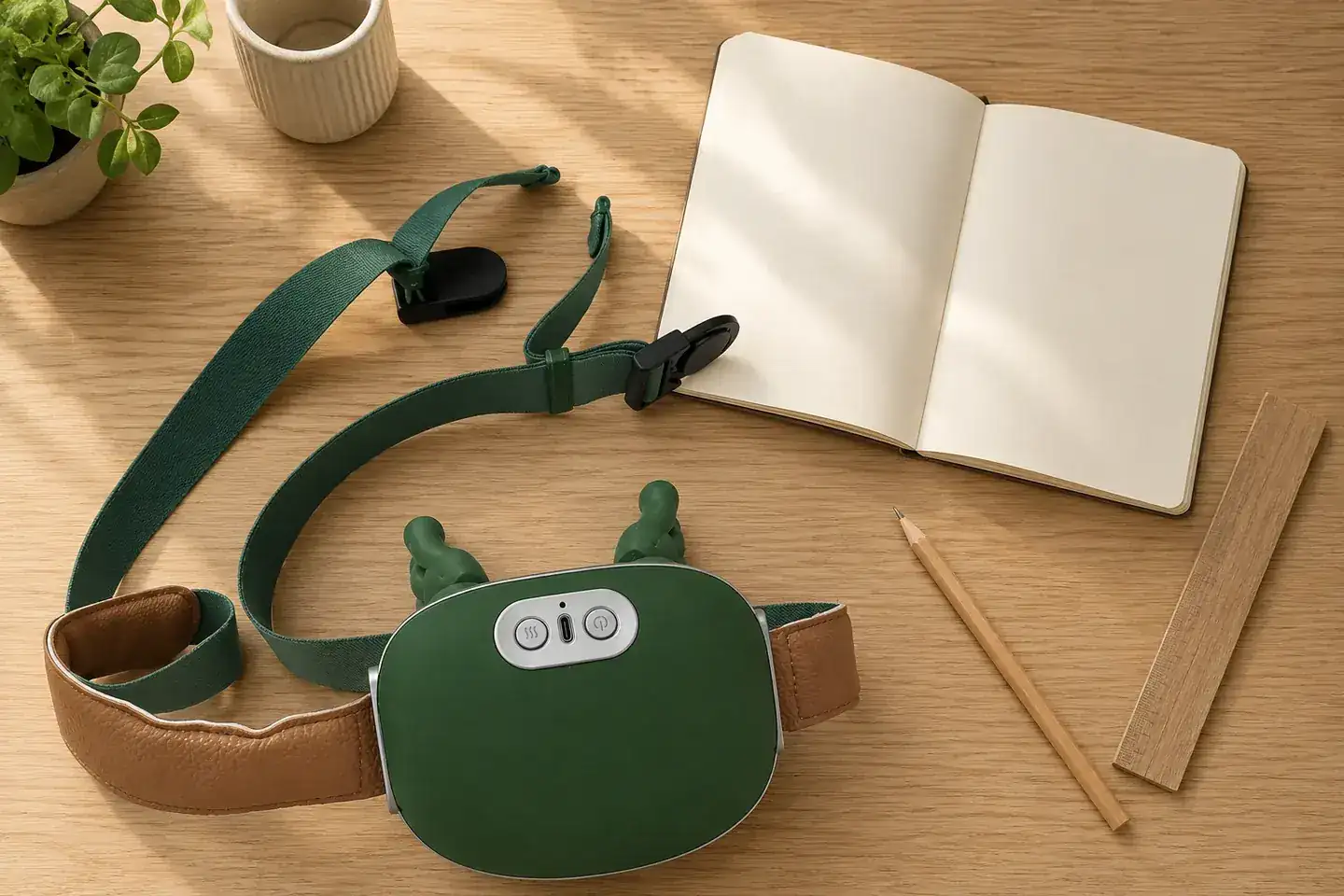
This is the one that cannot be traded away, because everything else is a refinement of it. Pressing applies force to one point, holds it, and releases — the mechanical event that interrupts a contraction. Vibration shakes a housing and spreads a small amount of energy across everything it touches. Both are pleasant; only one is doing the thing you came for.
Check it in the photograph rather than in the copy. Contact points standing proud of the surface mean pressure. A smooth face means something else. There is a fuller version of this test in what shiatsu means on a box.
2 · Are your hands free?
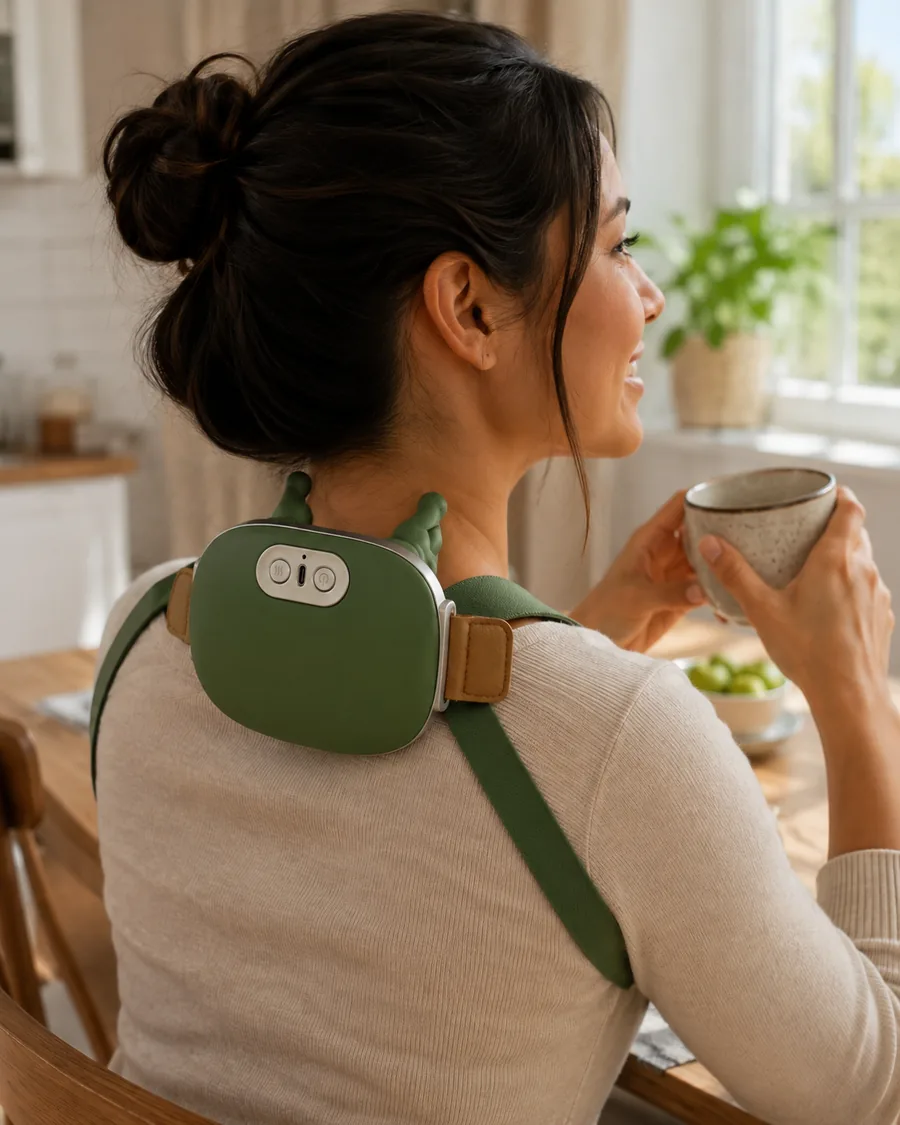
A handheld device asks you to hold a weight steady with the shoulder raised for the length of the session, which is the static work that tightened the shoulder in the first place. It photographs well and it gets used twice. A device that rests on you and buckles behind you leaves your hands doing nothing at all, and that single difference does more for long-term use than any specification.
3 · How is the firmness set?
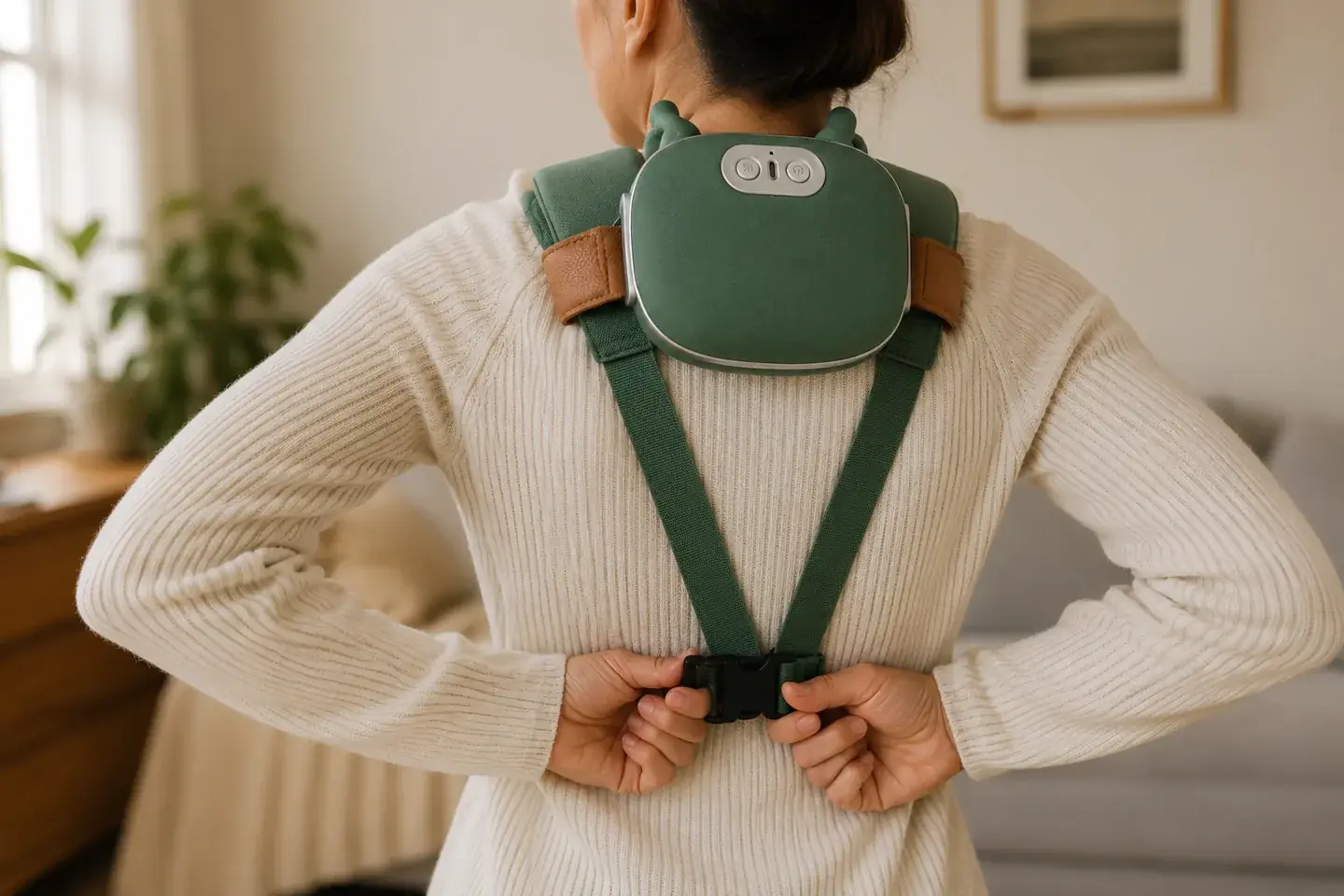
Three fixed steps on a dial suit whoever the dial was designed around. A strap you buckle to your own fit adds a range on top of the modes: leave it slightly loose and the same mode is noticeably gentler. That is why one unit can suit someone with a slim neck and someone who wants it deep, and it is why buyers who found a device too strong almost always started at the top of everything at once.
4 · Does it run without a cable?
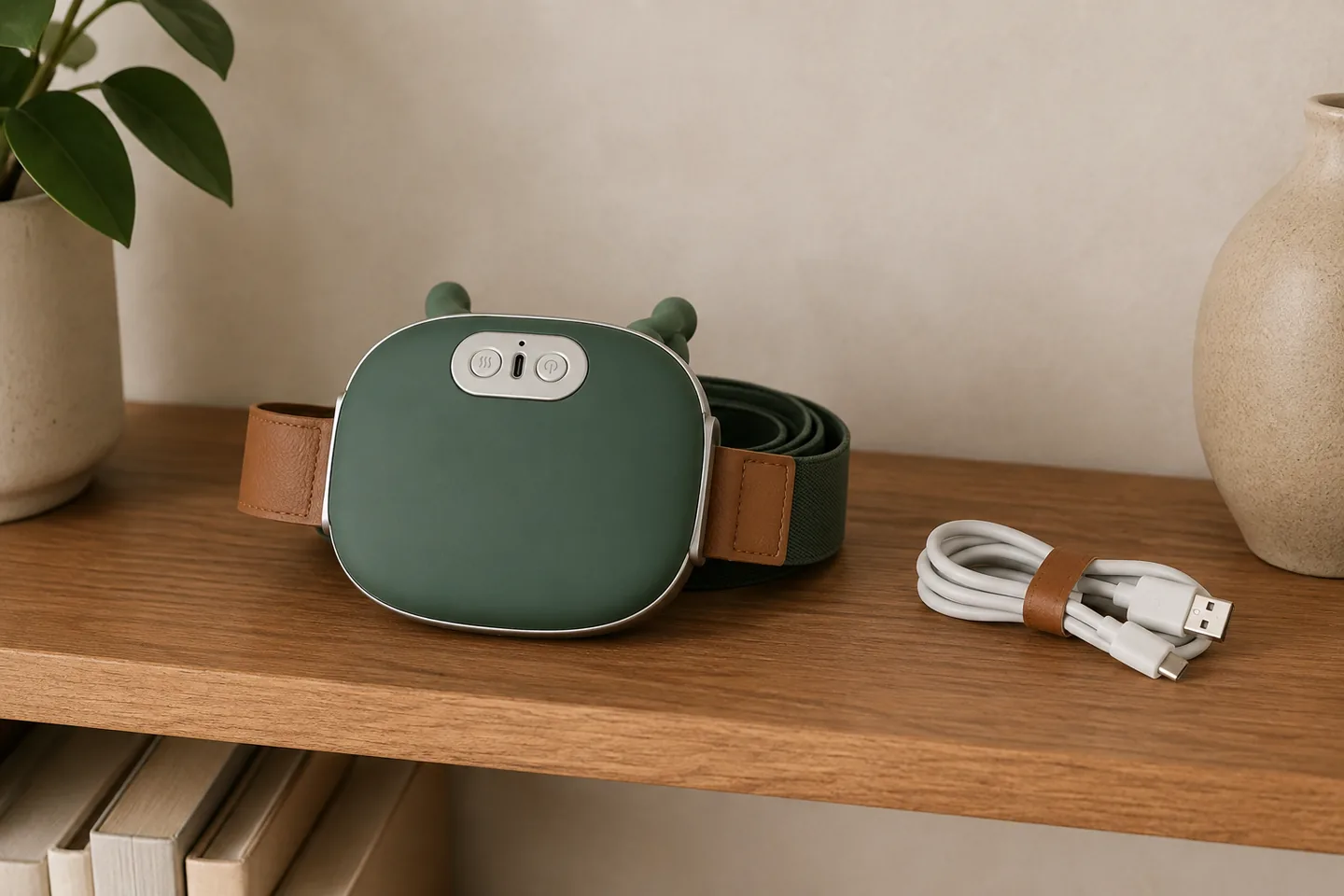
A device that plugs in is used in the room with the socket, at a time when nobody needs that space, with a lead across the floor. None of that stops anyone using it once; all of it stops someone using it four times a week. Cordless is filed under convenience and behaves like a usage feature.
Two follow-ups worth asking while you are there: how long a full charge takes, and whether the device runs while plugged in. Ours takes about three hours on a 2,000 mAh battery, shows red while charging and white when done, and does not run on the cable. More on the cordless page.
5 · Can the heat be switched off?
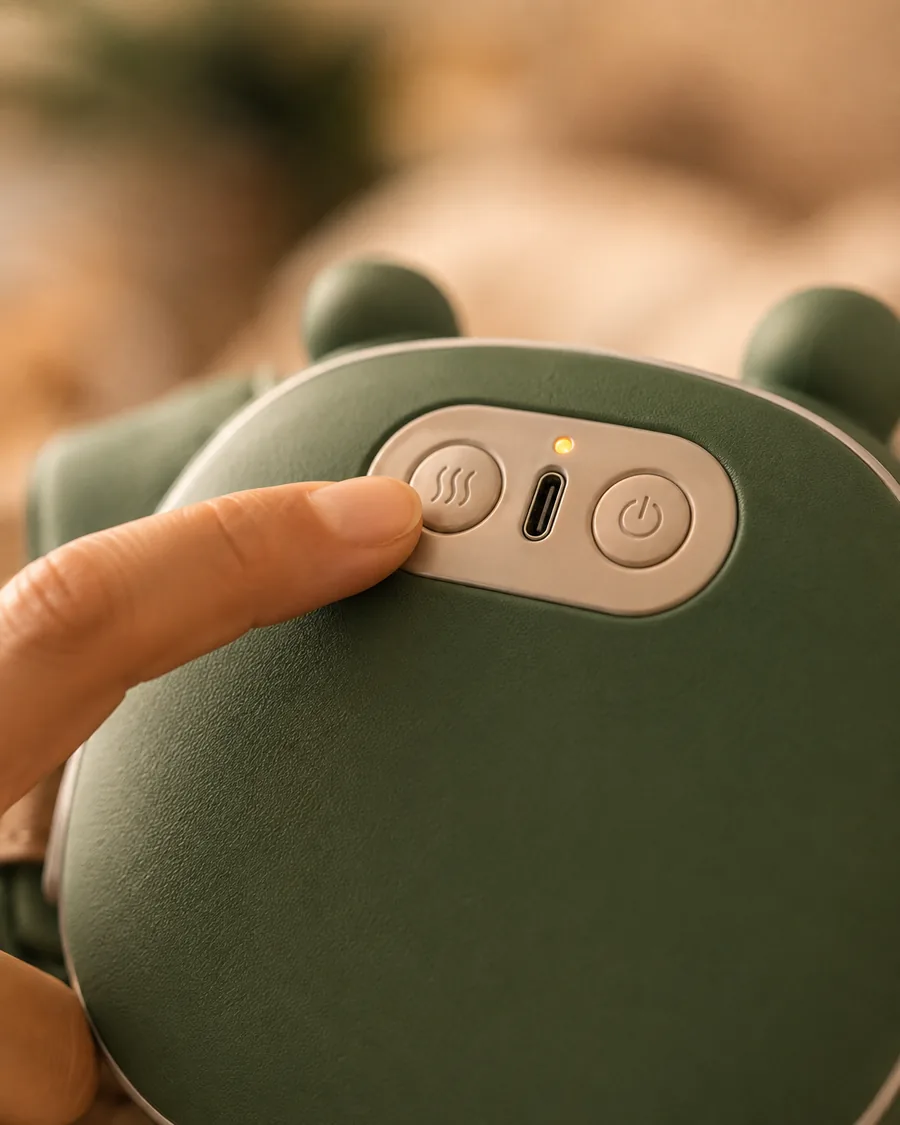
Warmth makes a contracted muscle easier to work, and it is the part most people notice first. It is also wrong on a hot evening, wrong over an area that is already sore, and wrong when you want a short session without the drowsiness. A heat control that is independent of the massage is a real feature; heat bundled into the mode is a limitation you discover in July.
6 · Does it reach past the neck?
A device limited to the neck is used for one thing. A strap that repositions is used for several, and more reasons to pick something up is more sessions. Ours reaches the neck, trapezius, shoulders, waist and calves — the calves are not in any documentation we hold, and they were confirmed in use. It does not reach the upper back, because the arms do not open wide enough outwards.
How to choose a neck massager: the six, on one line
| Question | What good looks like | Ours |
|---|---|---|
| Press or vibrate | Countable contact points | Two hand-shaped heads, five silicone fingers each |
| Hands free | Rests on you | Sits on the shoulders, buckles behind |
| Firmness | A range you set | Three modes plus how tightly the strap is buckled |
| Cable | None in use | Cordless; about three hours to a full charge |
| Heat | Switchable separately | Two levels, 42 °C (108 °F) and 45 °C (113 °F), on their own key |
| Reach | Beyond the neck | Neck, trapezius, shoulders, waist, calves |
What none of the six will tell you
Two things, and both are worth asking a seller directly. Whether the battery arrives with anything in it — ours does not, and it is the most common surprise on opening the box. And how long a full charge takes, because it decides whether the device is ready when you are: ours takes about three hours on a 2,000 mAh battery. The eleven reviews we hold are on the reviews page.
For scale, and to explain why the category is so crowded: the World Health Organization puts the number of people living with neck pain worldwide at 222 million, drawing on the Global Burden of Disease study. A market that size produces a great many products that answer question one badly, which is why it is worth asking in that order.