
A neck massage machine you will still be using in six weeks
People who search for a machine rather than a massager are usually asking a practical question: is a device worth owning at all, or is this money better spent elsewhere. It deserves a straight answer with the arithmetic shown, so here it is, along with what this particular machine does.
The arithmetic, shown
The comparison people make in their heads is against booking a session with someone, so it is worth doing properly rather than gesturing at it. A course of appointments is a better intervention per session — a trained pair of hands can find things no machine will. It happens on a schedule, at a location, at a price per visit. A machine is a worse intervention per session that happens whenever you want it, for nothing, for years.
| A machine at home | Booking a session | |
|---|---|---|
| Per use, after purchase | A charge | The price of the session |
| Availability | Immediately, including twice in one day | When there is an appointment |
| Setup | Sit down and put it on | Travel there and back |
| Best at | Repetition, at the moment it tightens | Depth and finding what you cannot |
Which is why the framing is not either-or. If tightness across the neck and shoulders comes back most weeks, the thing that changes it is frequency, and frequency is what a machine is for.
What this neck massage machine is, mechanically
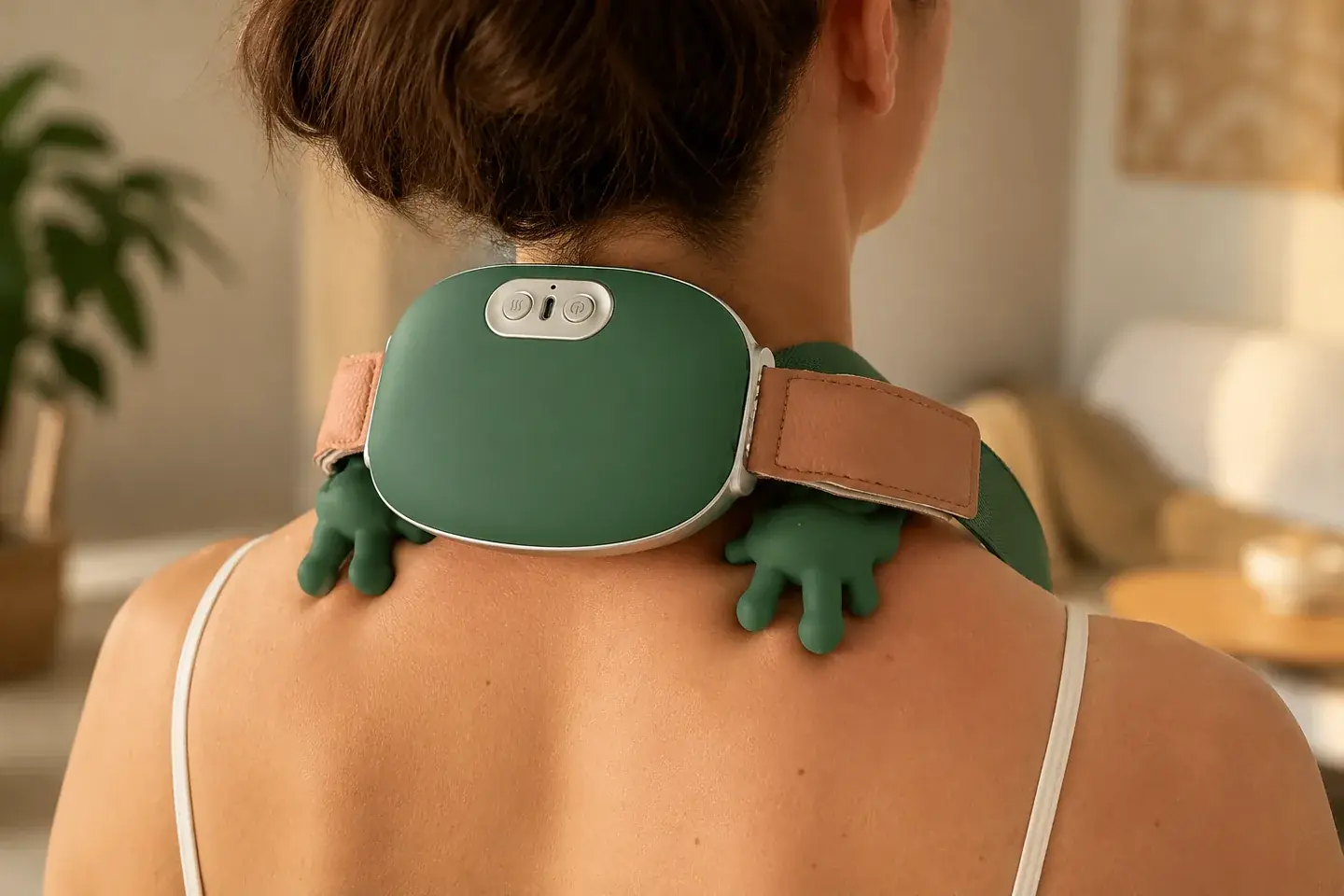
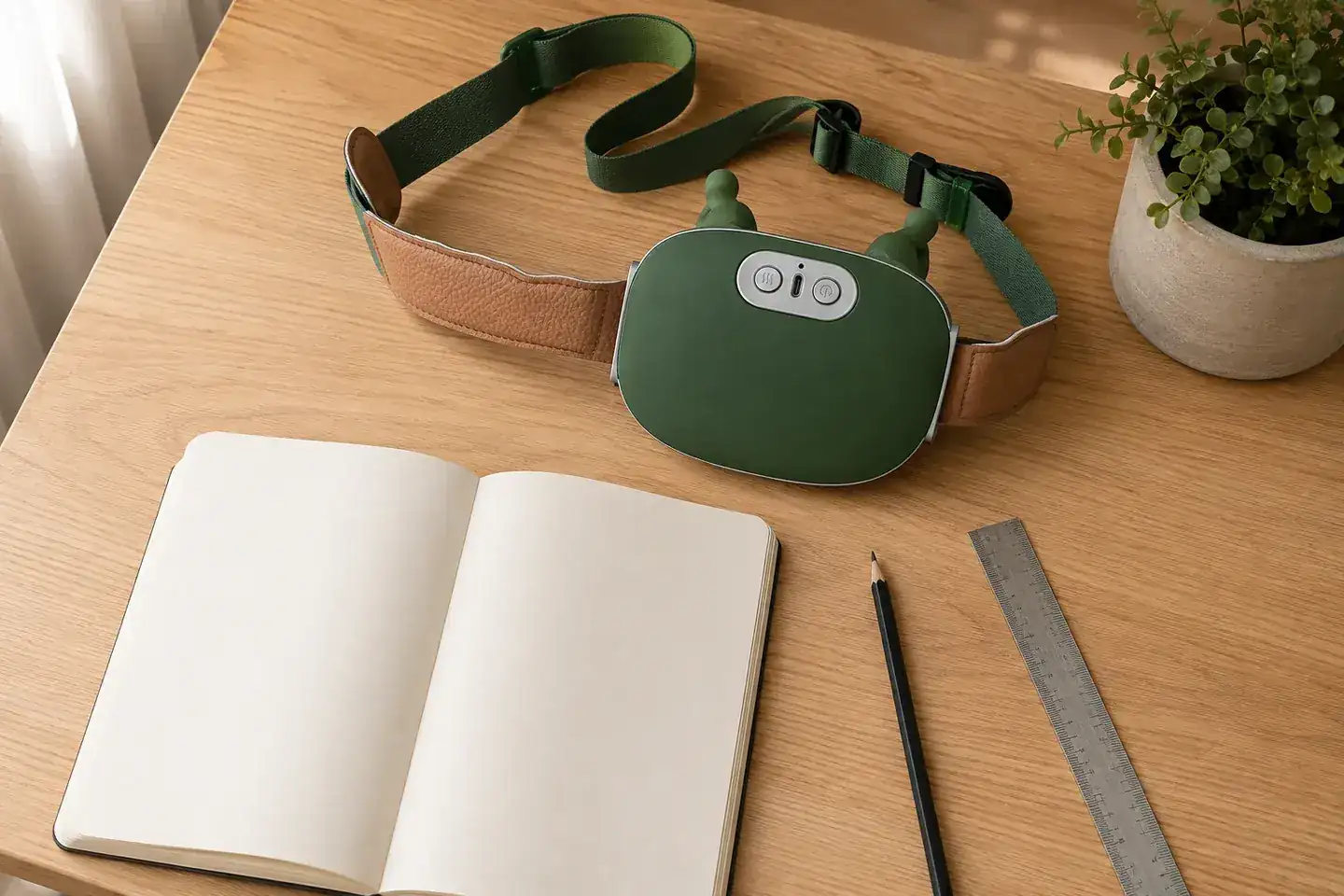
Two hand-shaped heads side by side, five food-grade silicone fingers on each, on flexible necks — a rolling pressure rather than a shake. Three massage modes, cycled with a short press. Two heat settings on plates that sit directly beneath the fingers, switchable independently of the massage. Rechargeable, with no cable in use, and a full charge in about three hours. It rests over the shoulders and buckles behind you, and the firmness comes from how tightly you set that strap on top of the three modes.
The full mechanism, including how to tell kneading from vibration in a product photograph, is on the shiatsu page, and the specification table lives on the product page.
The part of a neck massage machine nobody specifies
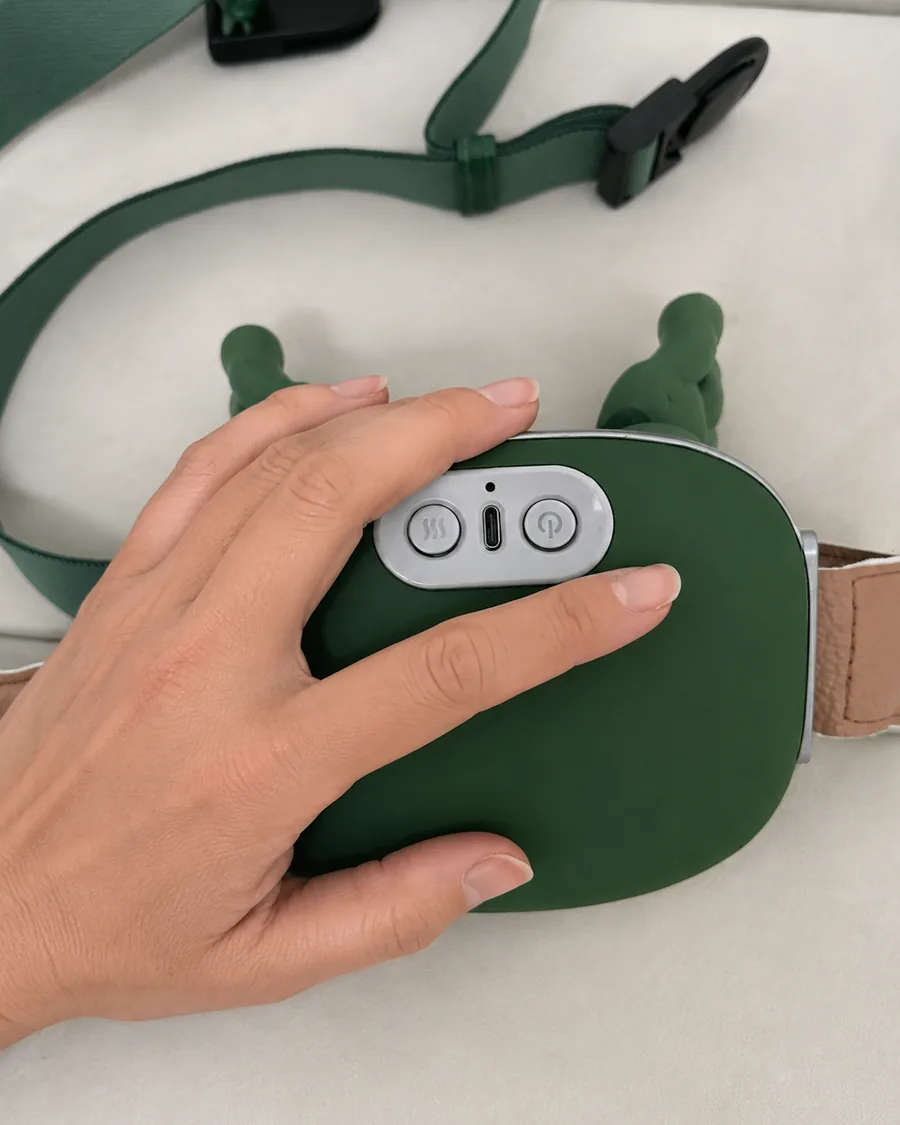
Whether it gets used. Everything above is checkable on a listing; this is not, and it is what actually decides the purchase. Three design choices carry almost all of it, and we can say which because the failures are consistent across the category.
First, hands free. A machine you hold makes the arm perform the static work that tightened the shoulders in the first place, so a ten-minute session is ten minutes of the cause. Second, no cable, because a machine that plugs in is used in the room with the socket rather than the room you are in. Third, pressure you control continuously, because a device that is either too light or too firm is a device you stop reaching for after the third try.
What it reaches, and what it does not
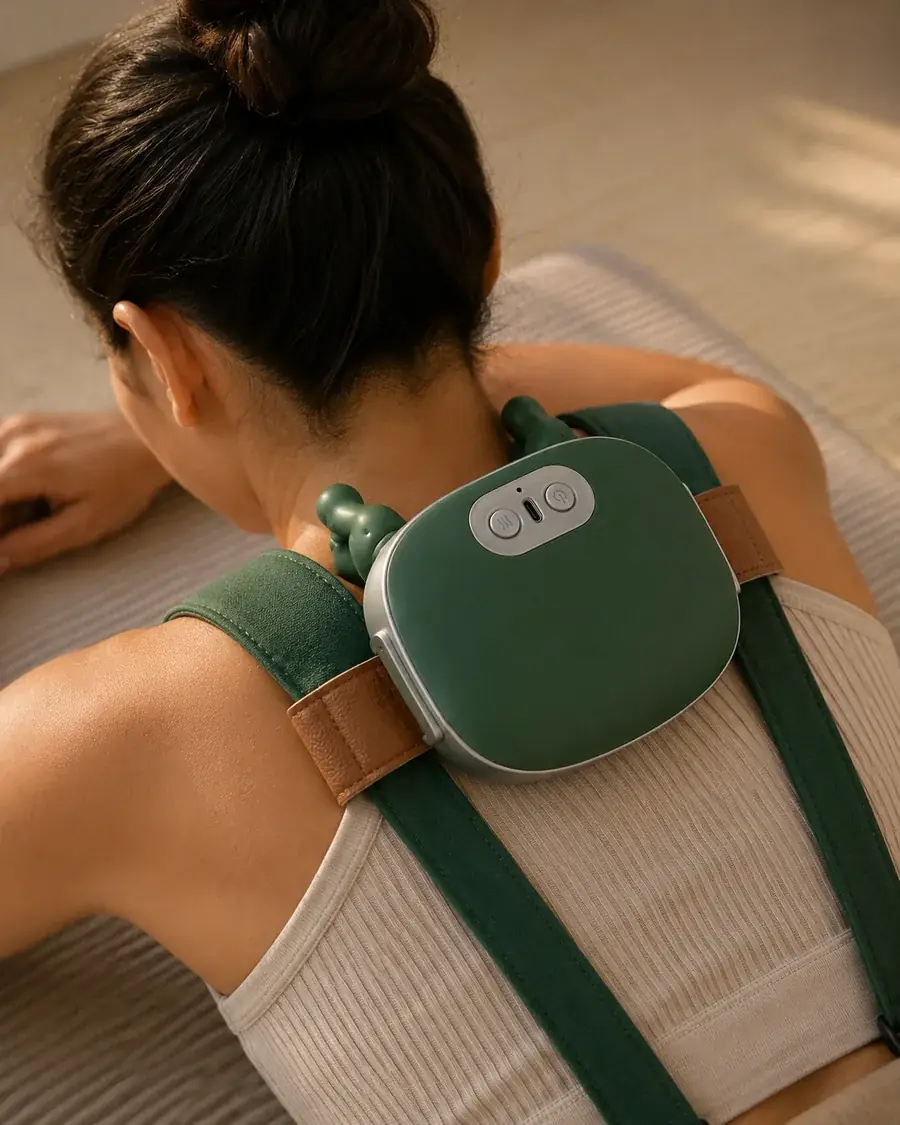
Neck, trapezius, shoulders, waist and calves. The calves are worth naming because they appear in none of the documentation we hold — no specification sheet, no manual — and they were confirmed in use. The upper back it does not reach, because the arms do not open wide enough outwards; a buyer reported that. Both are on the product page, in the same table, which is where a limit belongs rather than in the small print.
A machine that reaches five zones instead of one is used more often for the ordinary reason that more things send you to it. The lower back is covered on the back and neck page and the shoulder band on the neck and shoulder page.
Your first week with a neck massage machine
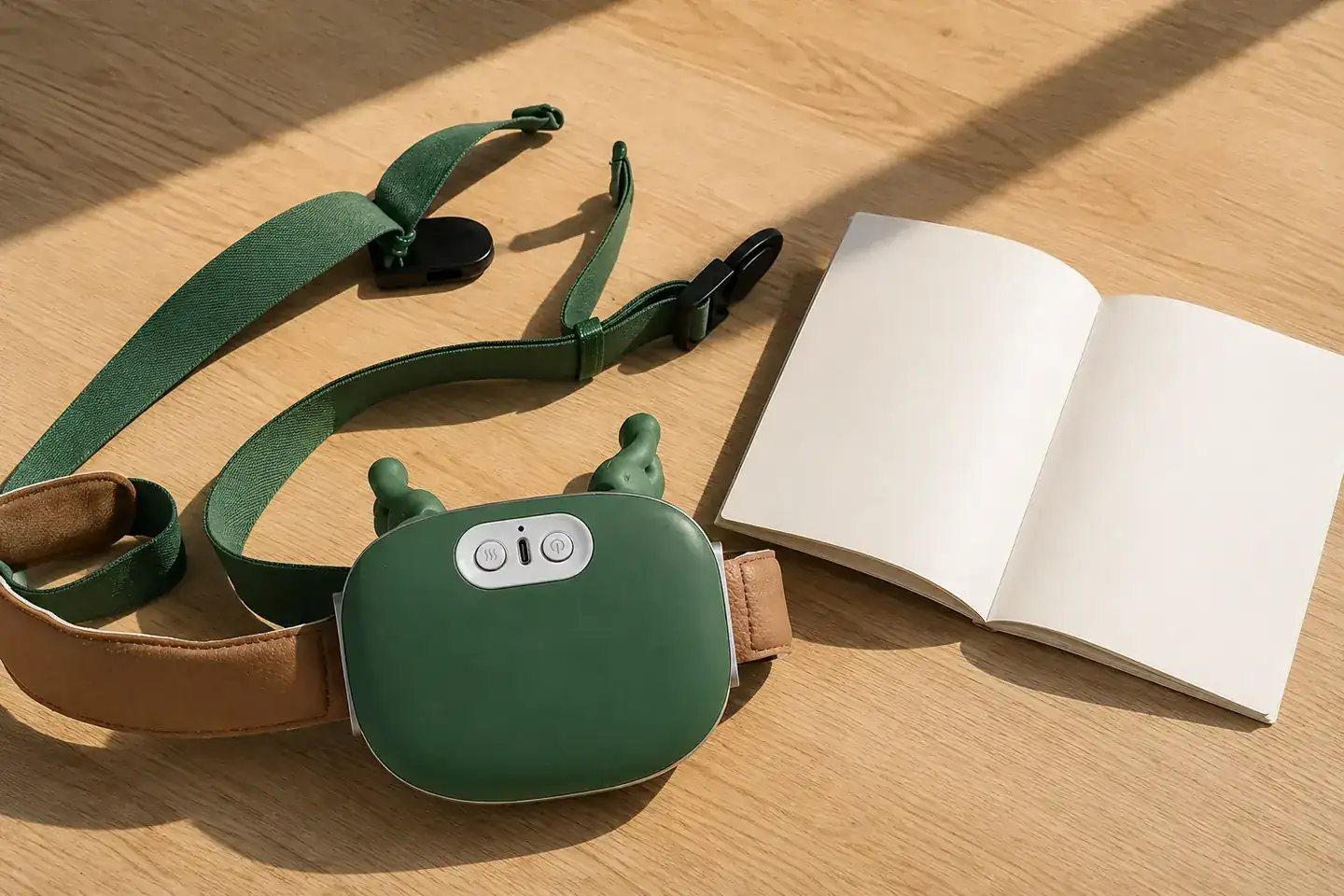
Charge it fully before anything else, because it arrives with an empty battery. Sit down, rest it over the shoulders with the fingers on the muscle rather than the spine, close the buckle loosely, and start on the first mode with the heat off. Give it a minute before adding either. A session runs ten minutes and stops on its own; one buyer advises staying between fifteen and thirty minutes in total the first few times.
Firm is the goal and sharp is not. Keep it off the front of the throat, off the spine itself, and off skin that is broken, bruised or inflamed. If you are pregnant, have a pacemaker or an implant, or are being treated for a neck condition, ask your doctor first. The manual states that it is a personal care item and cannot replace medication or medical equipment, and the full precautions are in the safety guide.
Practical questions
What does a neck massage machine actually do?
A kneading machine presses into the muscle and releases, one point at a time, in the way thumbs do. Ours does it with two hand-shaped heads side by side, five food-grade silicone fingers on each, with three massage modes and two heat levels at 42 and 45 °C (108 and 113 °F). It rests on the shoulders, so both hands stay free while it runs.
How much does it cost to run?
A charge, and a charge takes about three hours. That is the whole running cost, which is the reason a machine changes behavior: there is nothing to weigh up before a second session on the same day.
How long does a machine like this last?
The battery is the part that ages, and it does so gradually, covering fewer sessions per charge over a period of years. Keeping it out of a hot car and not storing it flat for months is most of the care it needs. Every order carries thirty days to change your mind, with return shipping on us.
Is it noisy?
It runs on a brushless motor, and what you hear is the low mechanical sound of the two heads working under the strap. Nobody among the buyers who wrote to us raises it as an issue. It is a moving machine rather than a silent one, and we have not put a decibel figure on it because we have not measured one.