
A heated neck massager, and the evenings you leave the heat off
Heat is the feature most likely to be listed and least likely to be explained. It does something specific, it has situations where it is the wrong choice, and where the heating element physically sits changes how much of it reaches you at all.
What warmth actually does
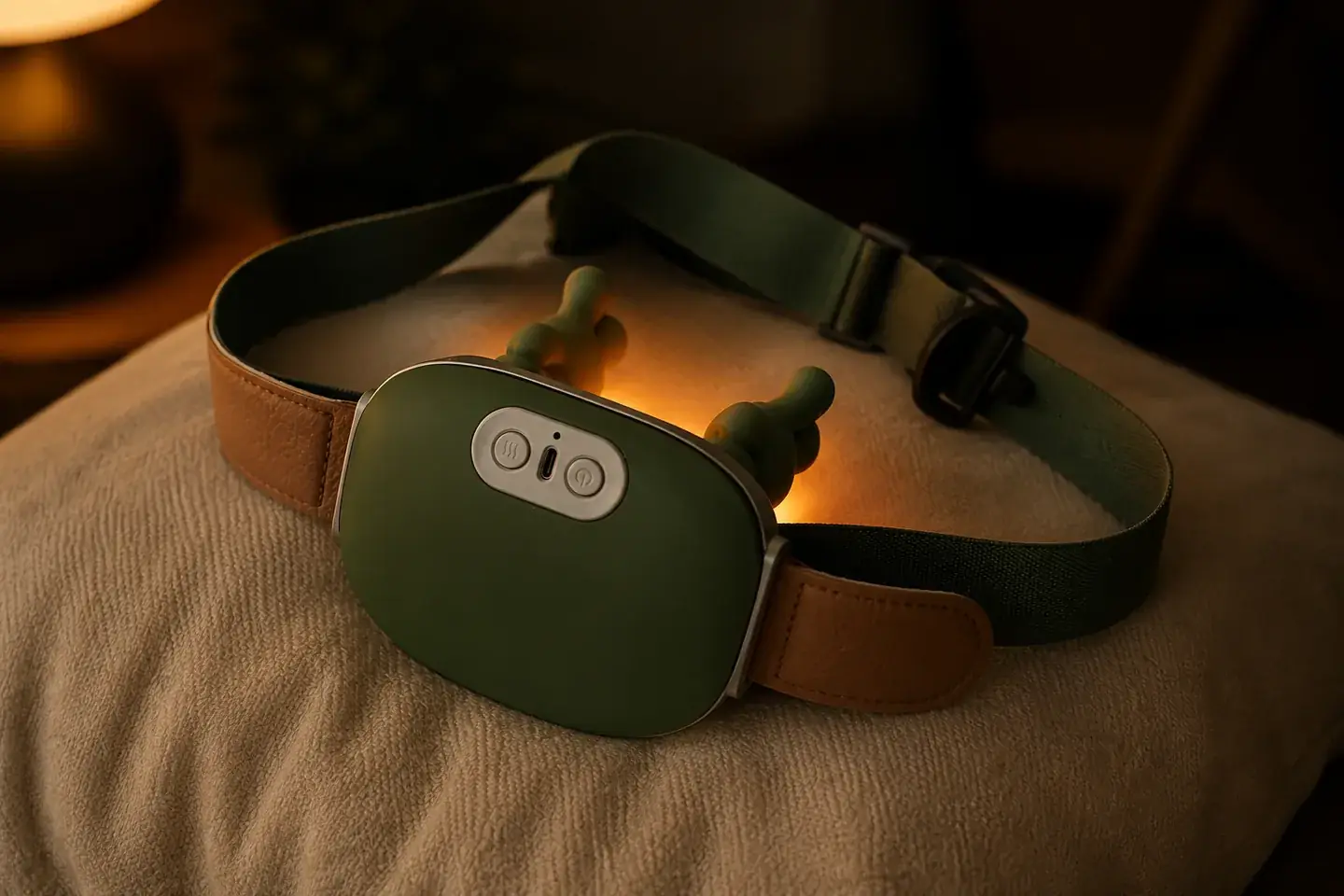
A muscle held in contraction for eight hours is not injured, it is simply not letting go. Warmth raises the local temperature of the tissue, which makes it more compliant and more comfortable to work — the same reason a hot shower makes a stiff neck feel briefly better and the same reason the relief does not last, because warmth alone changes nothing mechanically. Put the two together and the heat prepares the tissue while the kneading does the work.
That order is worth keeping in mind when you use it. Switching the heat on at the start of a session and giving it a minute before you change mode is a noticeably different experience from starting on the third mode on a cold muscle.
Where the plates sit in a heated neck massager, and why it changes things
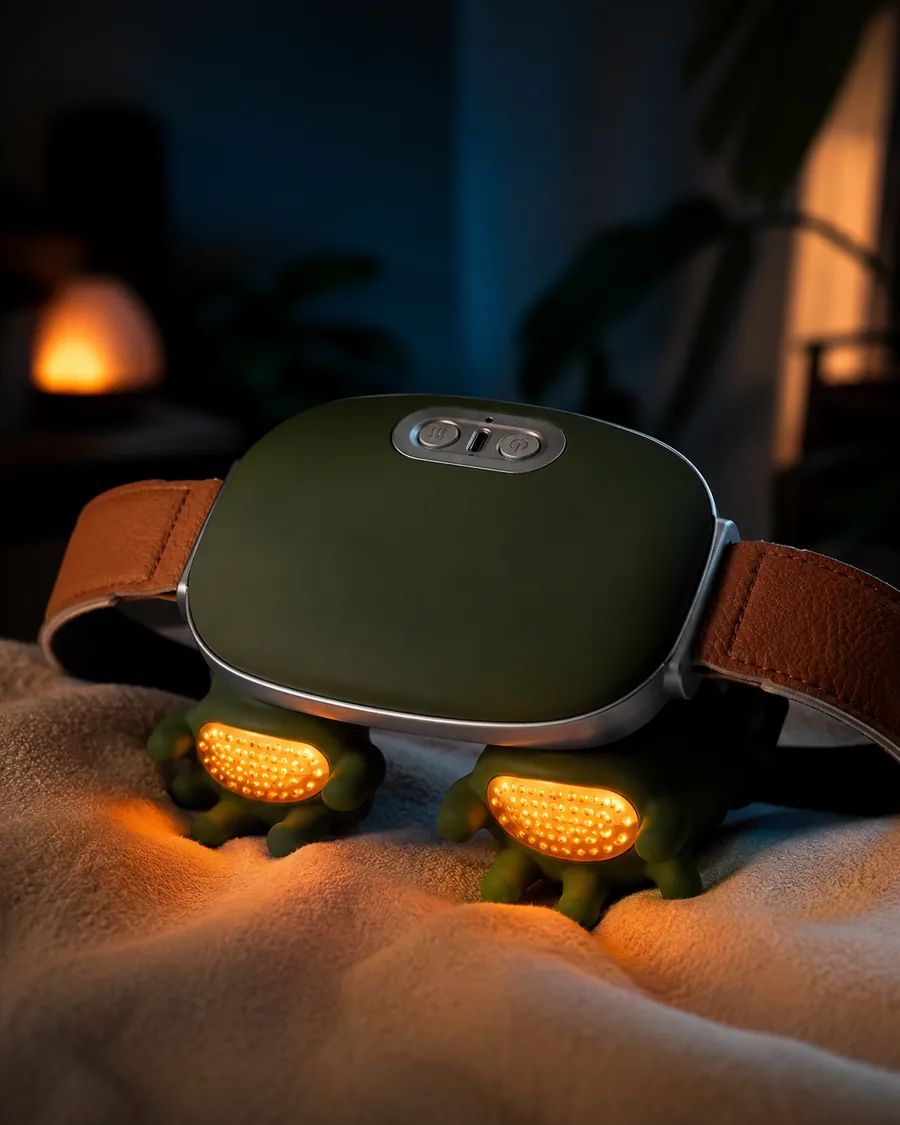
On many heated devices the warming element is wrapped around the outside of the massage head or built into the strap, which means the heat arrives on the areas the pressure does not. On ours the heating plates sit directly beneath the silicone fingers, so the warmth reaches exactly the point being worked. Buyers mention seeing them glow through the silicone, which is the simplest way to tell at a glance that the heat is on.
| Situation | Heat | Why |
|---|---|---|
| Winter evening, general stiffness | On, low | Warmth makes a cold, contracted muscle easier to work |
| Hot weather | Off | The kneading is the part doing the work; warmth just adds discomfort |
| An area that is sore or swollen | Off | Warmth over inflammation is the wrong direction |
| A short session before going out | Off | Heat tends to bring drowsiness with it |
| Last thing at night | On | The drowsiness is the point |
| Over clothing | On, high | A layer of fabric takes the edge off the surface temperature |
Two settings rather than eight
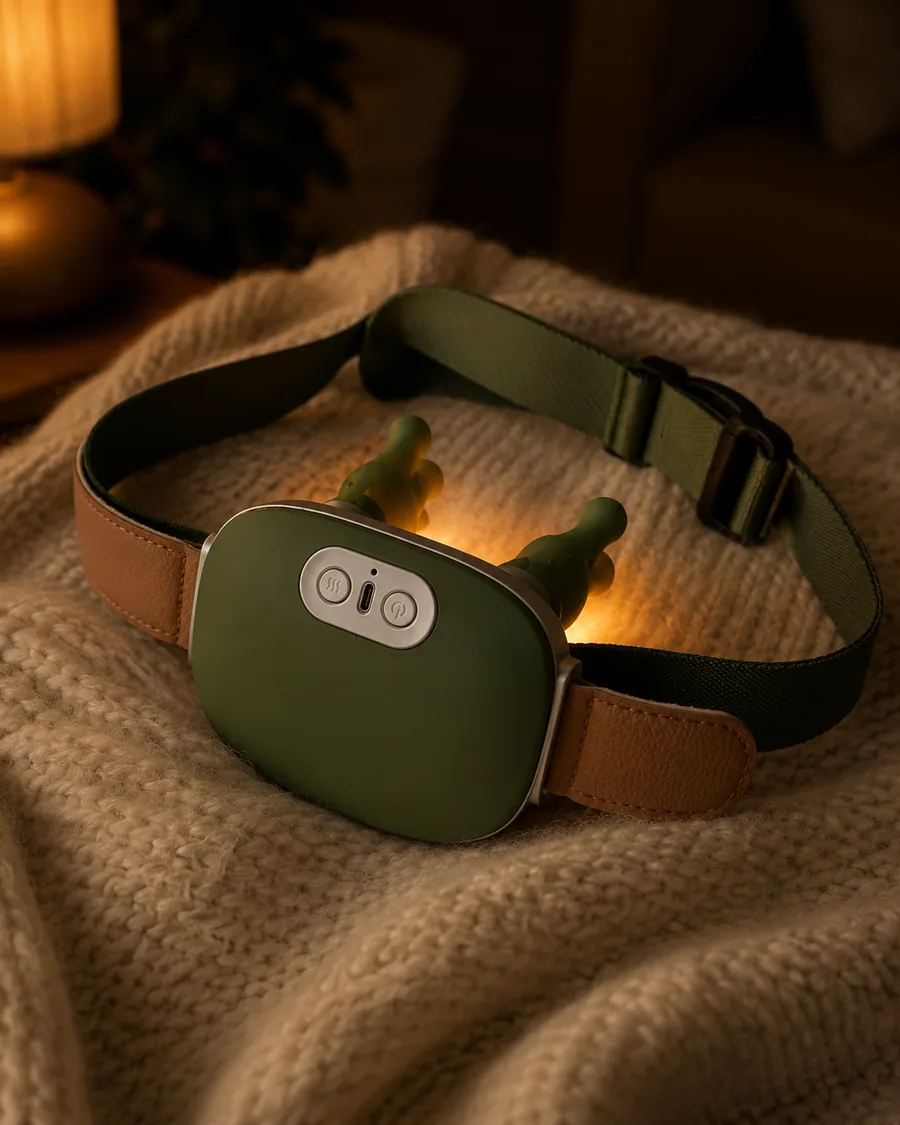
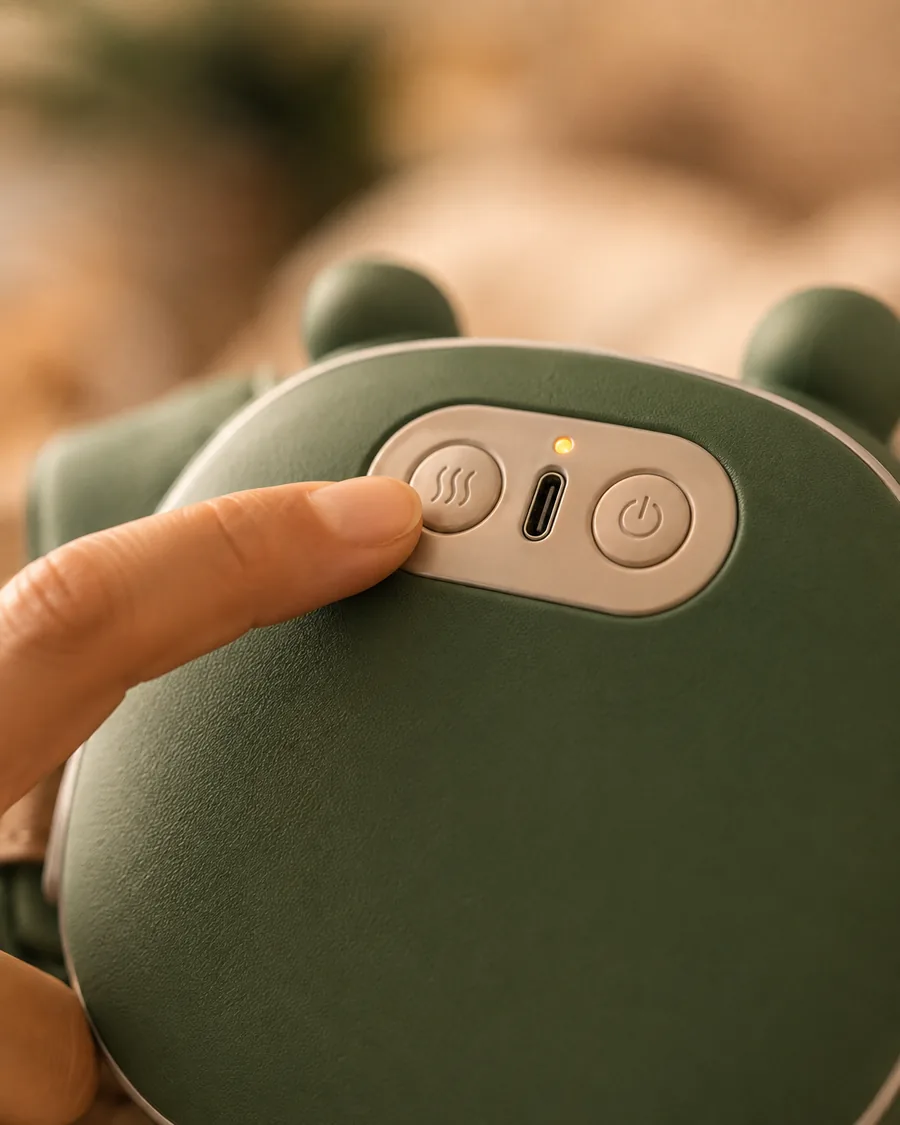
There is a temptation to read more settings as more control, and on a heating element it usually is not. What you are choosing between is comfortable warmth and noticeably warm, and two clearly separated settings make that choice in one press. The finer control on this device is elsewhere: the firmness comes from how tightly the strap is buckled, so most of the adjustment happens before you press anything at all.
Which is just as well, because changing anything once the device is resting on your neck means raising an arm, and that is mildly awkward. Set the heat you want before you settle back.
The safety part, said plainly
Heat and pressure together are the combination that needs a boundary drawn around it. Keep the device off the front and sides of the throat, off the spine itself, and off skin that is broken, bruised or inflamed. Stop if anything feels sharp or uncomfortably hot rather than firm and warm. If you are pregnant, have a pacemaker or an implant, or are being treated for a neck condition, ask your doctor before using any heated massage device. The manual states that it is a personal care item and cannot replace medication or medical equipment, and the full list of precautions is in our safety guide.
Heat over the lower back and the calves
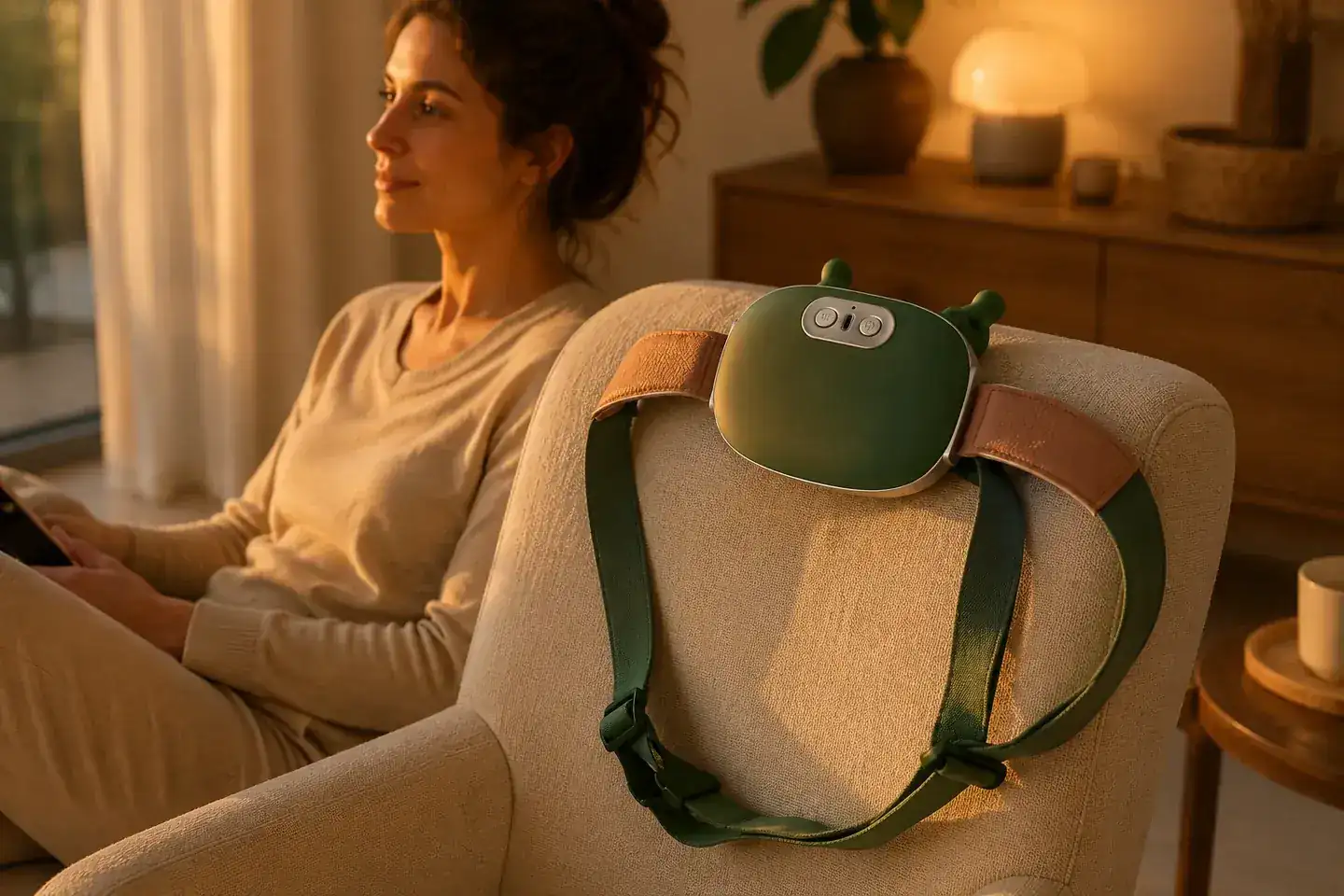
The zones the device reaches are wider than the neck, and the heat travels with the heads wherever they go. Over the waist it is the same session at a different height. Over the calves — a zone that appears in none of the documentation we hold, and which was confirmed in use — the warmth is arguably the better half of the experience after a day on your feet. The full zone map is on the product page, and the lower back specifically is covered on the back and neck page.
Charging a heated neck massager, and what heat costs you
Running the heat draws more from the battery than the kneading alone, which in practice means a heated session shortens how many sessions a charge covers rather than shortening any individual session. A full charge takes about three hours. The device arrives with an empty battery, so the first session waits on the first charge — worth knowing before you open the box on a Friday evening. More on the cordless side of it is on the cordless massager page.
Heated neck massager: questions about the heat
Does heat make a neck massager more effective?
It makes a contracted muscle easier to work, which is why the two are usually sold together. Warmth is also the part most people notice first on a cold evening. It is a companion to the pressure rather than a substitute for it: heat on its own is a hot water bottle, and the kneading is what does the mechanical work.
When should I switch the heat off?
On a warm evening, over an area that is already sore or inflamed, and any time you simply want a short firm session without the drowsiness that warmth tends to bring. The heat on ours is a separate control, so switching it off leaves you all three massage modes.
How hot does it get?
Two levels: 42 °C (108 °F) on low and 45 °C (113 °F) on high, both figures given in the manual supplied with the device, on a dedicated key that cycles low, high, off. It is designed to be worn against the skin through a layer of clothing or directly, and the plates sit under the silicone fingers rather than on an exposed surface. If it ever feels uncomfortable rather than warm, the manual asks you to stop.
Can I use the heat without the massage?
The two controls are independent, so you can run the heat on its own, the kneading on its own, or both together. Most people end up with a habit: heat and the first mode in winter, kneading alone in summer.