
What a shiatsu neck massager actually does
The word appears on almost everything sold in this category, which makes it close to useless as a filter unless you know what it is meant to describe. It has a precise mechanical meaning, it is easy to check on any listing, and it separates two kinds of device that feel entirely different in the first minute.
The mechanism, in one paragraph
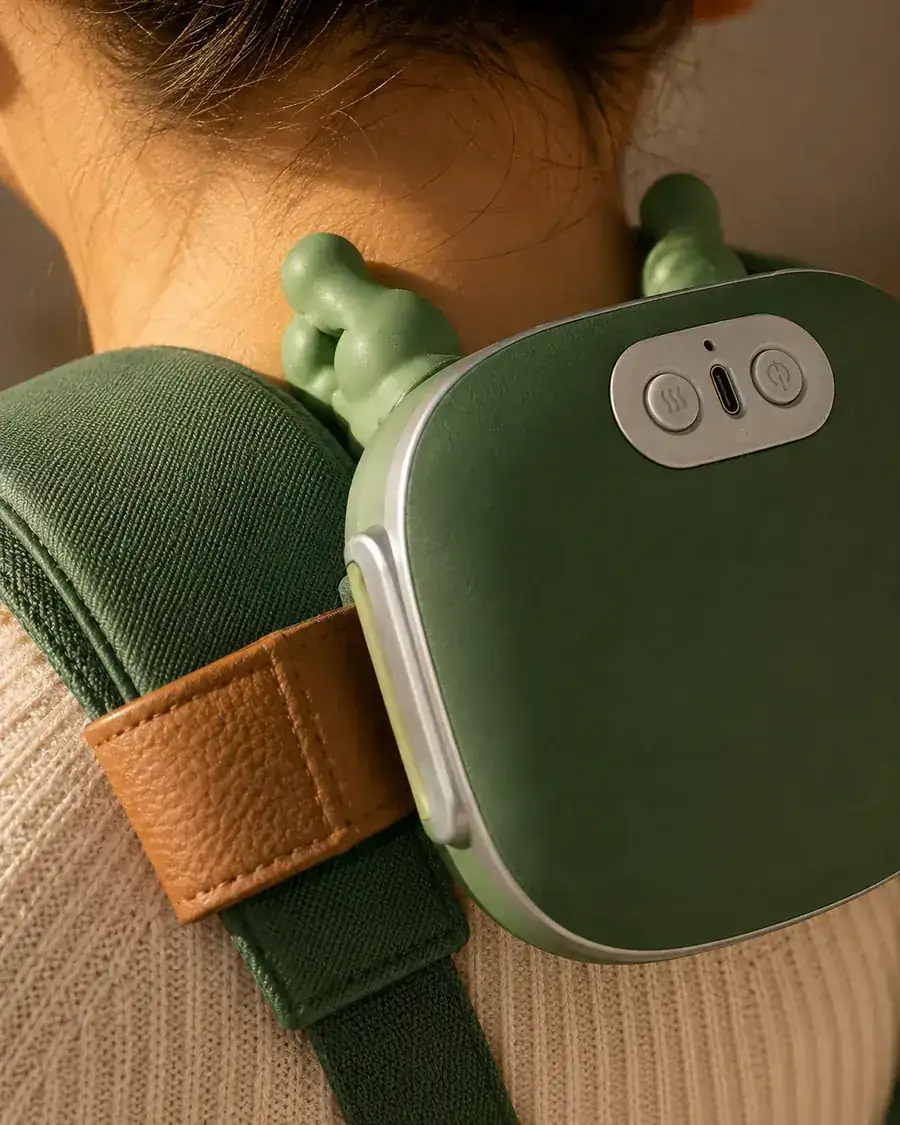
Two hand-shaped heads sit side by side, each carrying five raised silicone fingers on a flexible ribbed neck. Each finger comes into contact with the muscle, presses, and lifts away as the next one arrives. The result is a traveling point of pressure rather than a general shaking. On our device the two heads are shaped as hands, five fingers each, mounted on flexible ribbed necks that let them move against the muscle. What they deliver is a rolling pressure rather than a shake, which is as close as a machine gets to the pressure of a hand — and on this one the resemblance is literal.
| Shiatsu kneading | Vibration | |
|---|---|---|
| What moves | Rotating heads carrying raised contact points | A motor inside a sealed housing |
| Where the energy goes | Into one point at a time, then the next | Spread thinly across the whole contact surface |
| What you feel | Distinct pressure that travels | A general buzz |
| Visible in a photo | Nodes or fingers standing proud of a disc | A flat or padded face |
| Typical contact points | Four to ten | None |
Why the word is on almost every box
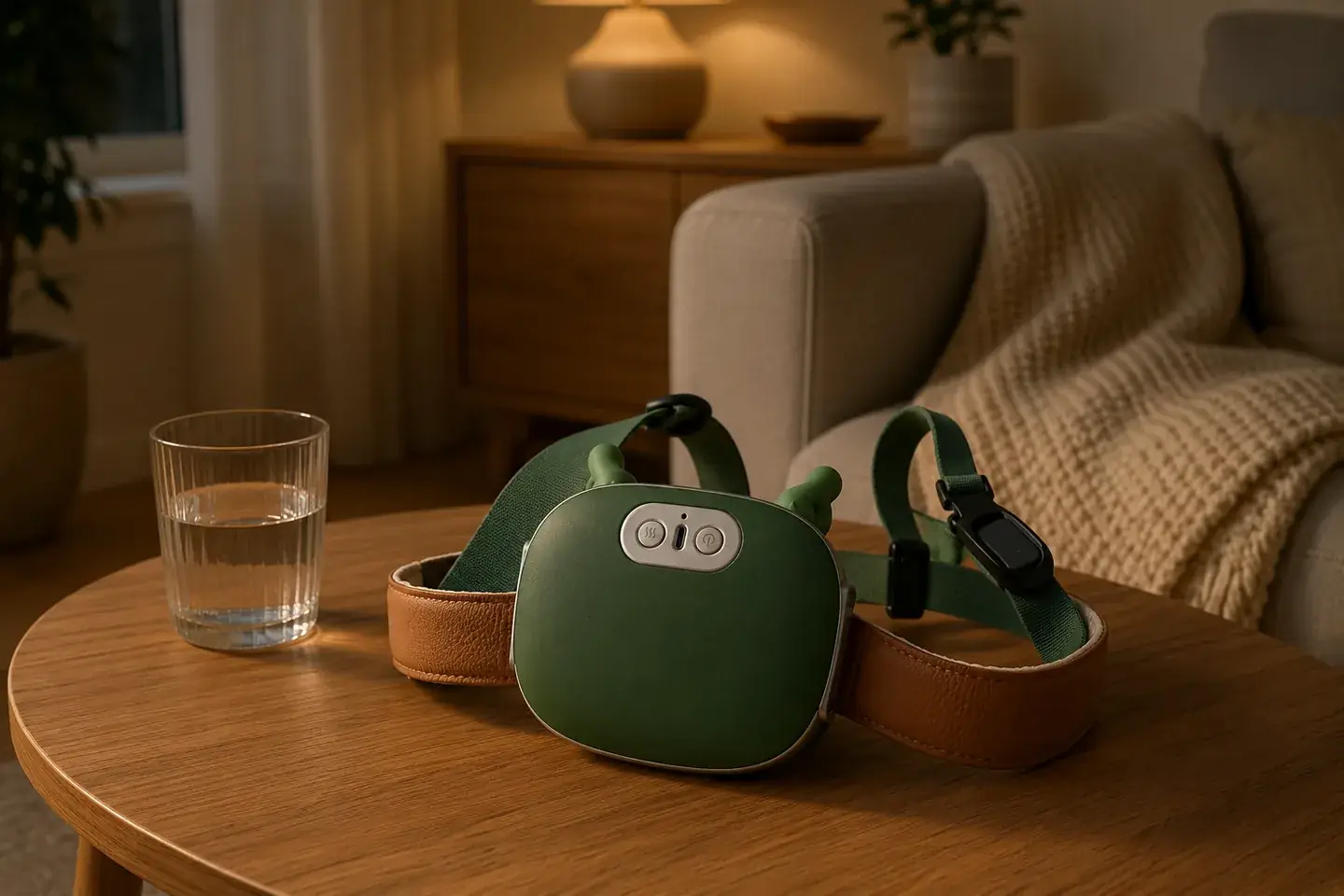
Shiatsu carries a suggestion of technique, and it has no protected meaning in retail, so it ends up printed on devices whose mechanism has very little to do with applied pressure. This is not a reason to distrust it; it is a reason to stop treating it as the filter and start looking at the photograph. Contact points standing proud of a head are the mechanism. A smooth face is something else, whatever the box says.
The practical test takes about five seconds on any product listing. Zoom into the part that touches you. If you can count individual nodes, the device presses. If the surface is continuous, it vibrates.
What ten fingers do that four nodes do not
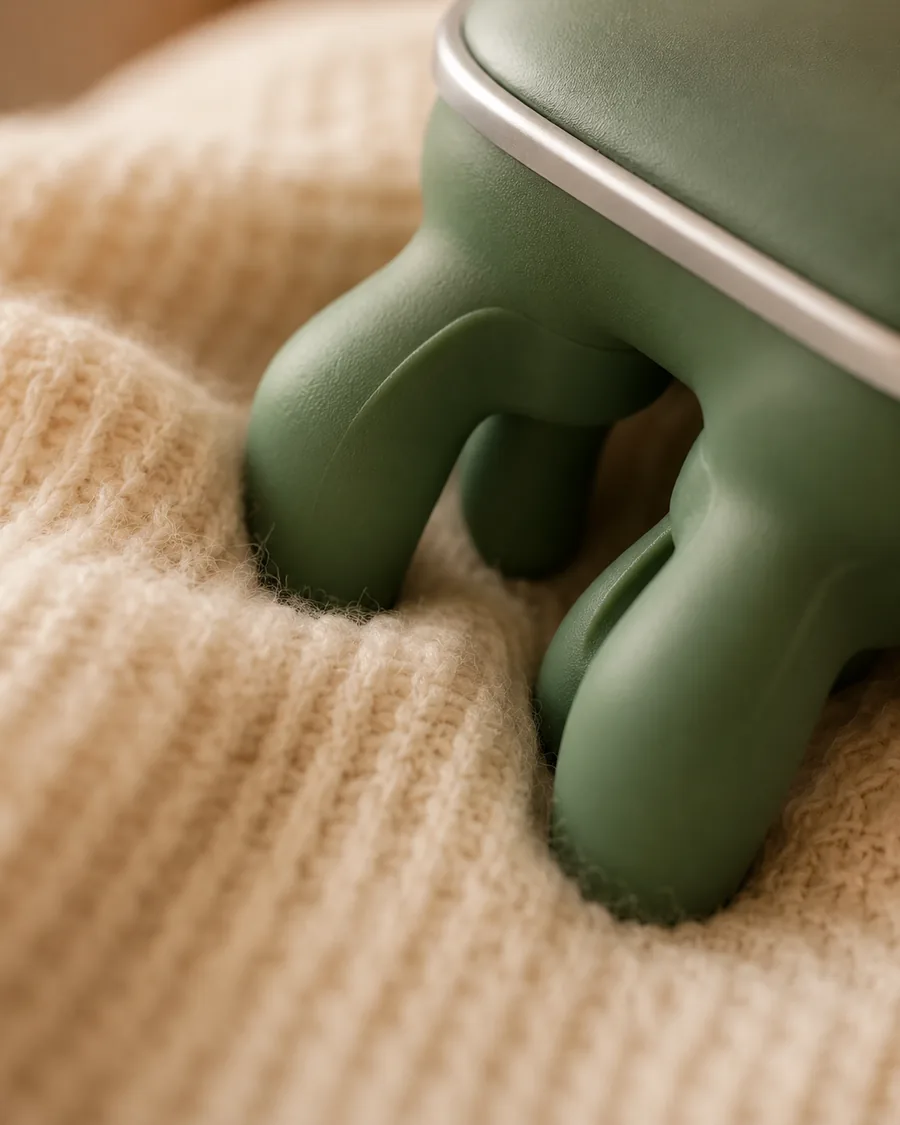
Most devices in this category carry four nodes on two heads. Ours carries ten fingers across two heads, and the difference is not simply more of the same. With four large nodes, the pressure lands in four places and the gaps between them are wide enough that a narrow neck can sit in one. With ten smaller fingers, the points are closer together and the traveling pressure is more nearly continuous — which is what a buyer meant when she wrote that the fingers are all separate and that it works firmly even on a slim neck.
The silicone matters too, for a duller reason. A rigid node transmits every bit of the motor to a single point of skin. A silicone finger deforms slightly under load, which spreads the contact over a few square millimetres more and takes the sharp edge off without reducing the depth.
Heat, and why it belongs with the pressure
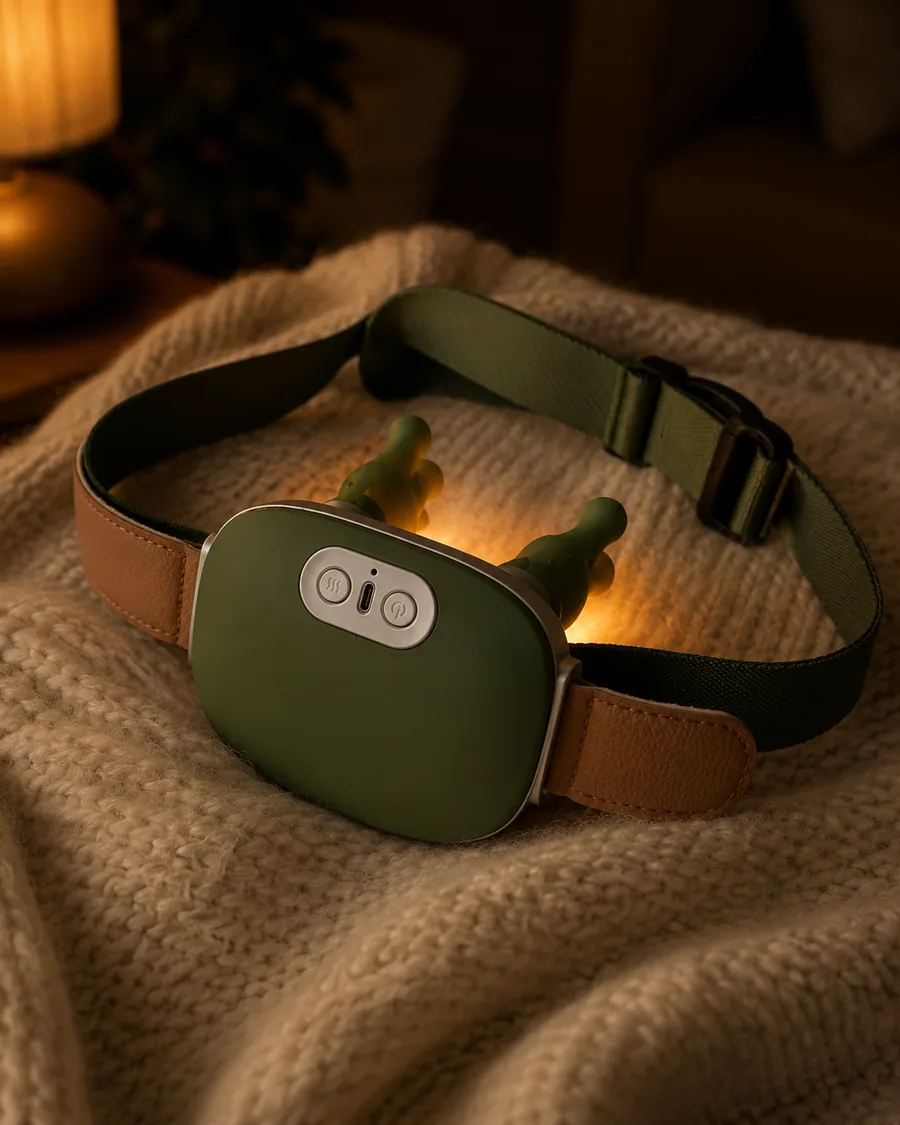
Most shiatsu devices offer warmth, and on ours the heating plates sit directly beneath the fingers rather than around them, so the heat arrives where the pressure does instead of spreading across the strap. The manual gives two levels: 42 °C (108 °F) on low and 45 °C (113 °F) on high. Two settings, and it switches independently of the massage, which matters more than it sounds — in summer, or on an area that is already sore, the kneading on its own is what you want. There is a fuller explanation of when to use it and when to leave it off on the heated massager page.
Using a shiatsu neck massager for the first time
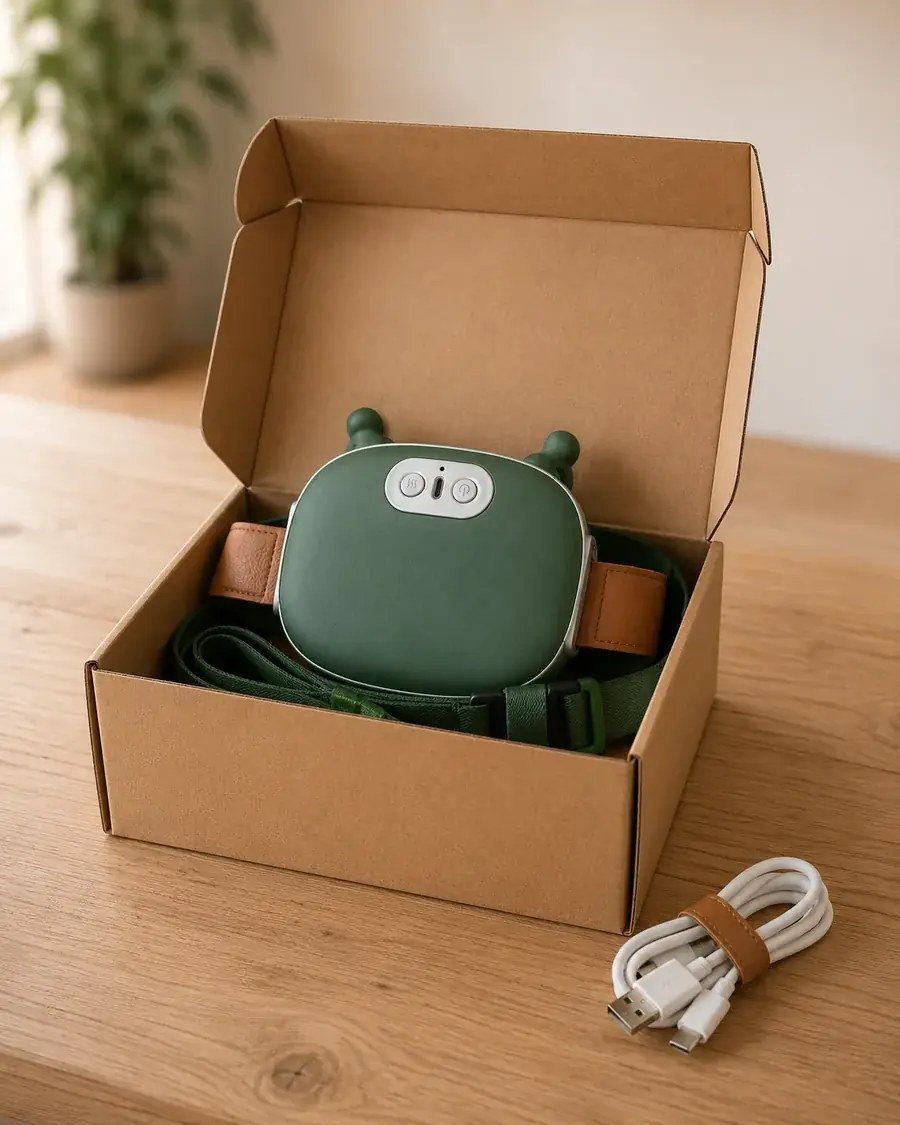
Shiatsu is firmer than most people expect, so the first session is where people either settle into it or put the device away. Sit down first. Rest it over the shoulders so the fingers land on the muscle rather than on the spine. Take a strap in each hand and hold them loosely, because the pressure comes entirely from how hard you pull. Start on the first mode with the heat off, give it a minute, then add either. Buyers who found it too strong almost always started at the top.
Keep it away from the front and sides of the throat, off the spine itself, and off skin that is broken, bruised or inflamed. The manual states plainly that it is a personal care item and cannot replace medication or medical equipment, and that is worth taking at face value: if the pain is sharp, radiates down an arm, or follows an injury, it is a question for a clinician. The full set of precautions is in our guide to neck massager safety.
Where a shiatsu neck massager reaches
The shape decides this more than the mechanism does. A shoulder-worn shawl puts the heads on the trapezius and the base of the neck, and because it is a strap rather than a rigid collar, it can be moved down to the waist or wrapped around a calf. We publish the full zone map on the product page — including the one zone it does not reach, because we would rather you knew that before ordering.
Common questions about shiatsu neck massagers
What does shiatsu mean on a massager?
It describes heads carrying raised contact points that press into the muscle and release, rather than a motor that vibrates a surface. The name comes from a Japanese manual technique built on applied pressure, and on a device it is a description of the mechanism: pressure applied to a point, held briefly, then moved.
How can I tell shiatsu from vibration in a product photo?
Look for raised nodes or fingers standing proud of the surface that touches you. A shiatsu device has visible contact points, usually four to ten, standing proud of the heads that carry them. A vibrating device has a flat or padded surface with nothing standing proud of it, because the motor is inside and the whole housing moves.
Is shiatsu massage stronger than other kinds?
It concentrates the same energy into fewer points, so it feels considerably firmer than vibration at the same power. One buyer describes ours as effective and very powerful but not unpleasant, and notes it may be too strong for some. On a shoulder-worn device you control that with the strap: start on the gentlest mode and leave the buckle slightly loose.
How long should a shiatsu session last?
A session runs ten minutes and the device stops itself, so the first one needs no timing. One buyer advises fifteen to thirty minutes in total the first few times, meaning one or two sessions rather than a run of them. The manual asks you to stop if anything feels uncomfortable. The device ends its session on its own rather than running until you remember it.