
· The Nodly team
What is a shiatsu massager, and what does the word mean on a box?
The word carries a suggestion of technique and it appears on almost everything sold in this category, which makes it close to useless as a filter unless you know what it is meant to describe. It has a precise mechanical meaning and it takes five seconds to verify.
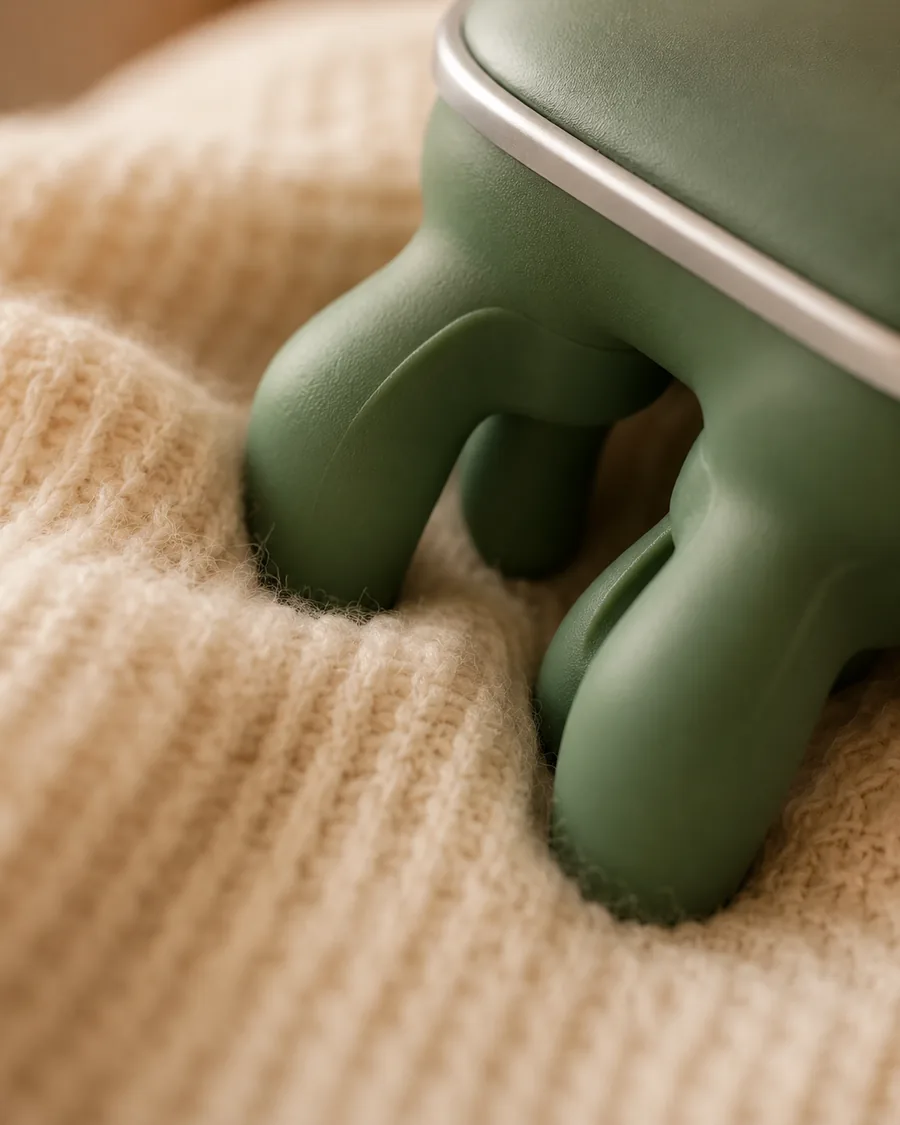
What is a shiatsu massager? The word, and what it borrowed
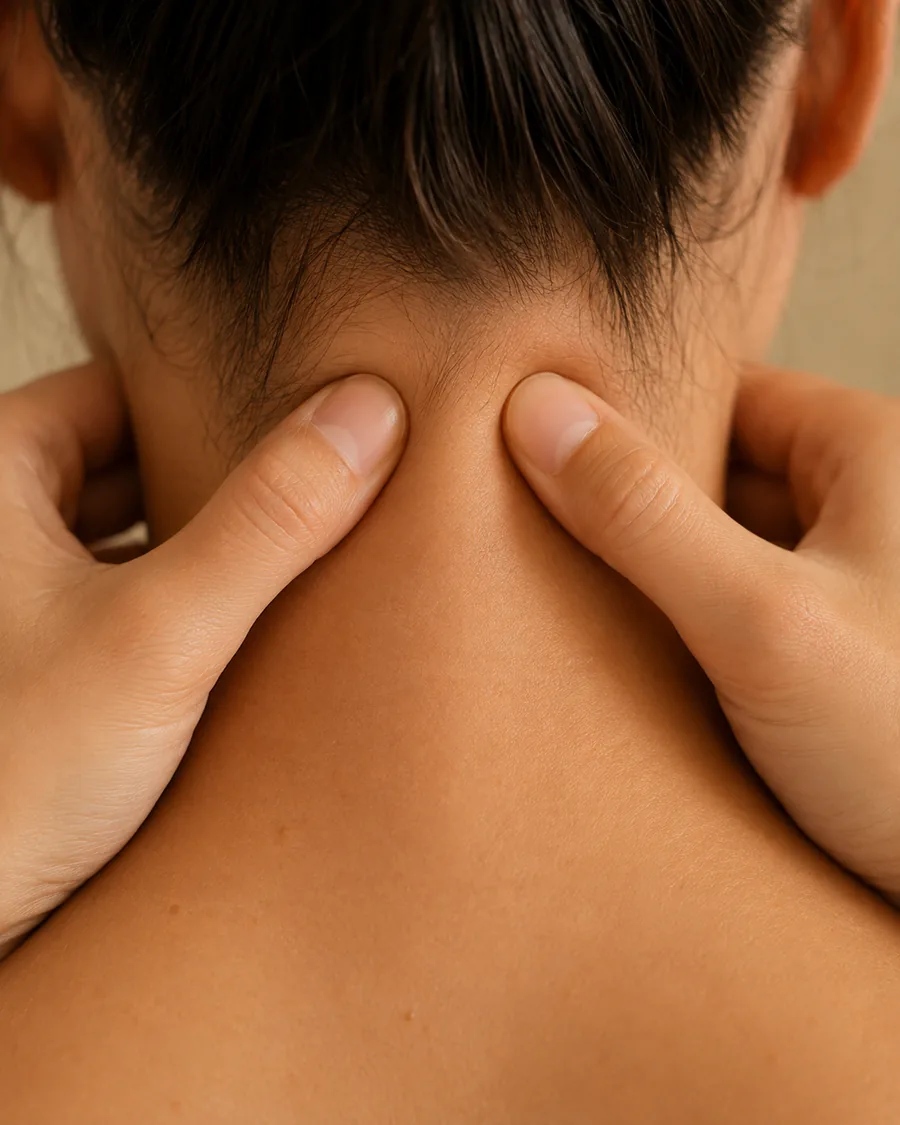
Shiatsu is a Japanese manual practice built on applied pressure — literally finger pressure — in which a practitioner presses into tissue with thumbs, fingers and palms rather than gliding across it. When the word migrated onto consumer devices it kept the mechanical half and left the rest behind. On a box, it is a claim about how the thing moves, not a claim about a tradition.
That is not a criticism. It is a genuinely useful distinction, because pressing and releasing is a different physical event from shaking, and a buyer who understands the difference makes a better choice. The problem is only that the word is unprotected, so it also appears on devices that do not do it.
The five-second test
| Pressing (what shiatsu describes) | Vibrating | |
|---|---|---|
| What you see in a photo | Nodes or fingers standing proud of the surface | A flat or padded face |
| Typical contact points | Four to ten | None — the housing moves |
| Where the energy goes | Into one point at a time | Spread across the contact area |
| What it feels like | Distinct pressure that travels | A general buzz |
| What it does to a contraction | The mechanical event that interrupts it | Warms and soothes the surface |
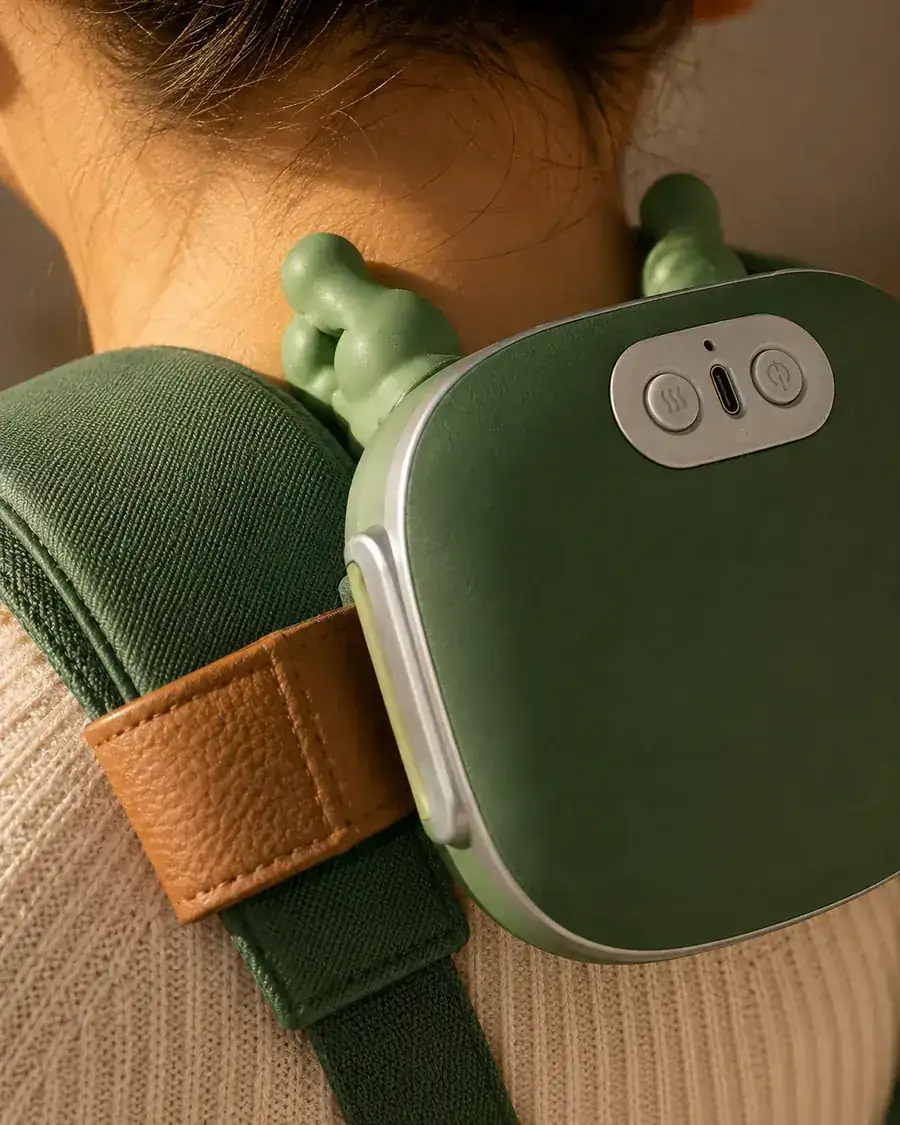
Zoom into the part of the product that touches you. If you can count individual nodes, the device presses. If the surface is continuous, it does something else, whatever the box says. That is the entire test, and it survives contact with any listing in this category.
Four nodes against ten fingers
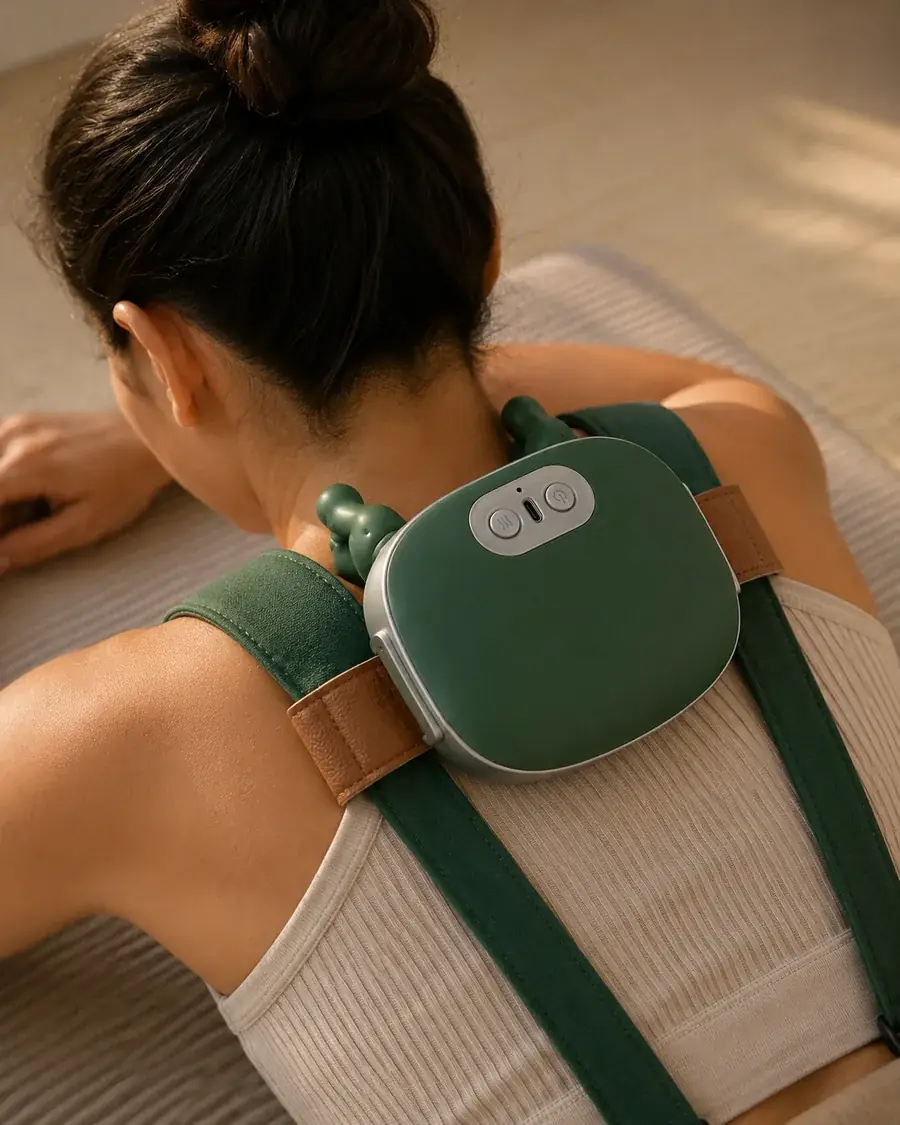
Most devices carry four nodes on two heads. Ours carries two heads shaped as hands with five silicone fingers each, and the difference is not simply a larger number. With four large nodes the pressure lands in four places, and the gaps between them are wide enough that a narrow neck can sit in one and feel very little. With ten smaller fingers the points are close enough together that the pressure is more nearly continuous across the band — which is what a buyer meant when she wrote that the fingers are all separate and that it works firmly even on a slim neck.
The material does something too. A rigid node puts the whole of the motor into one point of skin. A food-grade silicone finger deforms slightly under load, which spreads the contact over a few more square millimetres and takes the edge off without reducing the depth.
Is it stronger than other kinds?
It concentrates the same energy into fewer points, so at equal power it feels considerably firmer than vibration. That is the point of it, and it is also why the first session matters. One buyer describes ours as effective and very powerful but not unpleasant, and notes it may be too strong for some — which is fair, and answerable: start on the first mode with the strap buckled slightly loose, and add from there.
Sessions on ours run ten minutes and the device stops on its own. The heat is separate, two levels given in the manual as 42 °C (108 °F) and 45 °C (113 °F), and running the pressure with the heat off is a perfectly normal way to use it. There is more on that on the heated massager page.
Where the word does not help you
Shiatsu tells you nothing about shape, and shape is what decides whether a device gets used. A pressing mechanism inside a handheld body still asks your arm to do the static work that tightened your shoulders. A pressing mechanism inside a rigid pillow still needs a chair back. The mechanism is a necessary check rather than a sufficient one, and the rest of the checklist is in how to choose a neck massager.
For scale on why so many products compete for this word: the World Health Organization, drawing on the Global Burden of Disease study, puts the number of people living with neck pain worldwide at 222 million. A category that large attracts a lot of boxes, and the words on them are chosen by marketing departments rather than by engineers. The photograph is not.
If you want the mechanism as it applies to this particular device, including where the two hands sit and what the strap does, it is on the shiatsu neck massager page.