
· The Nodly team
Neck massage at your desk, without leaving it
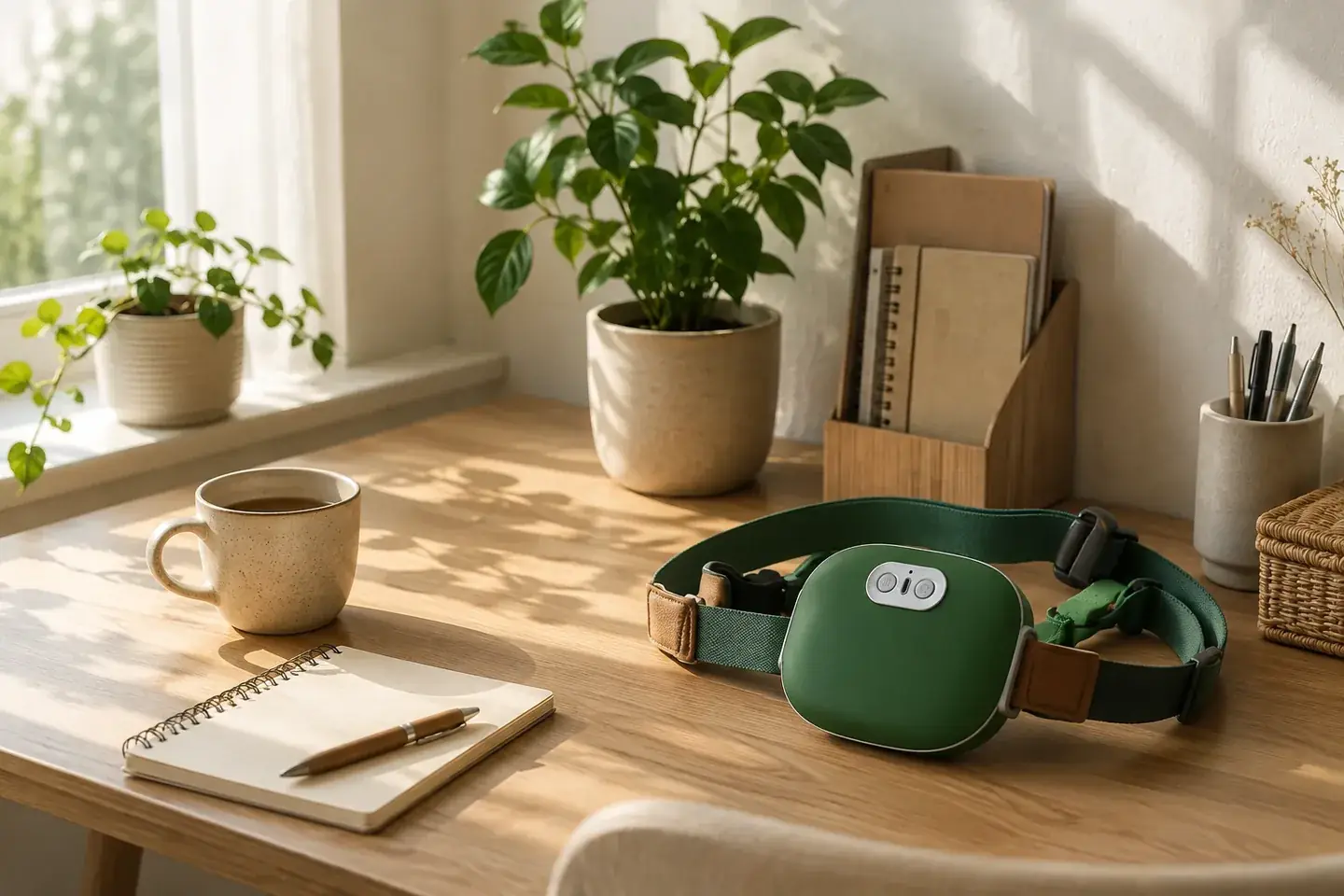
This is written for the desk rather than for the evening. Nothing here needs a mat, a change of clothes, or a room with a door — the whole point is that anything requiring those does not happen at half past three.
What the day is actually doing
Two separate loads, and they land in different places. The head weighs what it weighs, and every centimetre it drifts forward of the shoulders increases what the muscles at the back of the neck have to hold. Meanwhile the shoulders spend the day holding the arms out towards a keyboard, unsupported, which is quiet static work that never lets go.
Neither is dramatic and neither is an injury. They are simply hours of low-level contraction, and the reason it registers as a stiff neck by six is that muscle held in contraction for eight hours does not spontaneously return to where it started. The scale of it is visible in the workplace statistics: in Great Britain the Health and Safety Executive recorded 511,000 cases of work-related musculoskeletal disorder in 2024/25, 211,000 of them principally affecting the upper limbs or neck.
Neck massage at your desk: the three minutes that actually fit into a working day
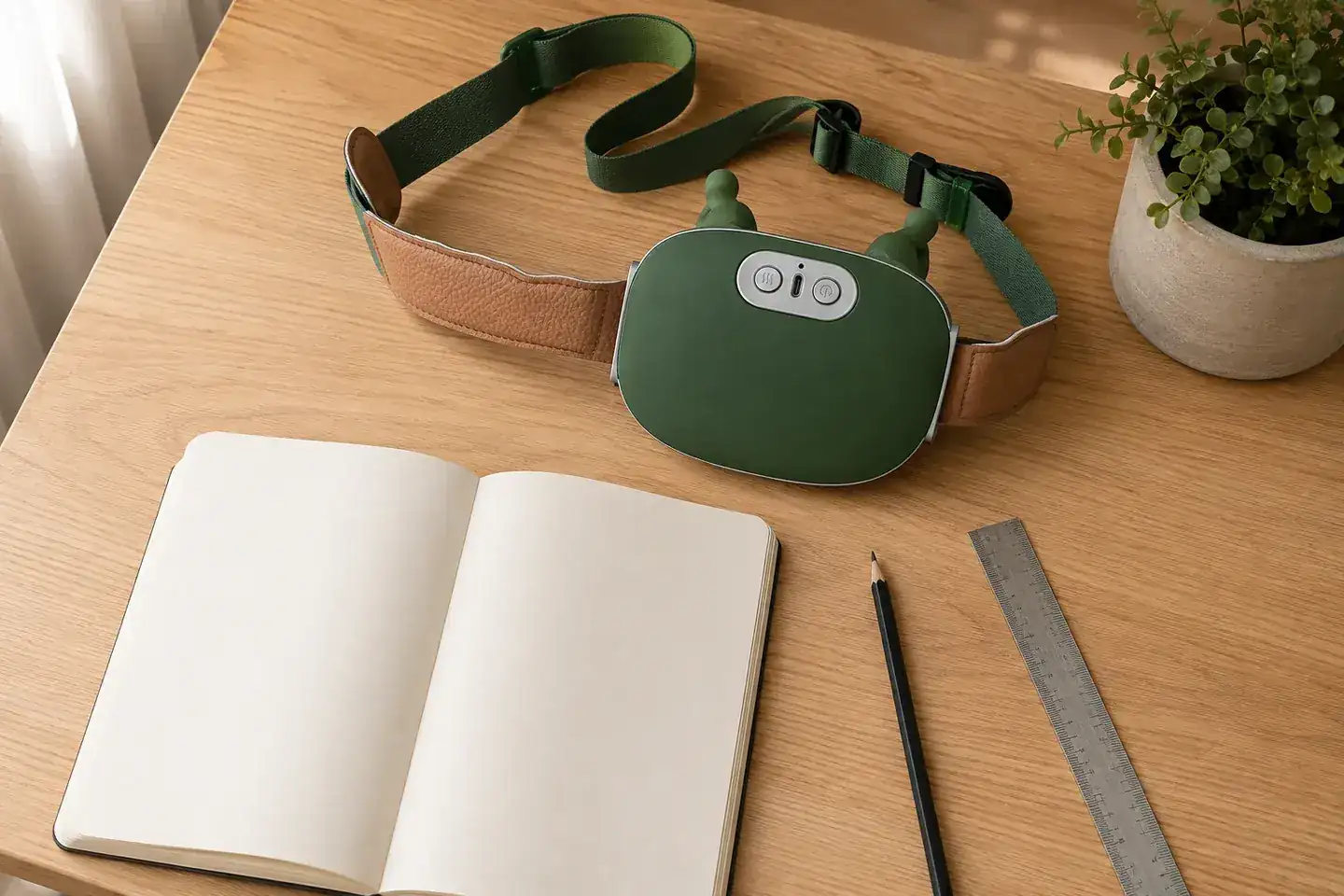
| What to do | How long | |
|---|---|---|
| Stand | Just stand up. Let the shoulders drop away from the ears | 10 seconds |
| Look up and around | Slow, small, no forcing. Both directions | 30 seconds |
| Work one side | Opposite hand on the shoulder, squeeze and release along the band | 1 minute |
| Work the other | The two sides almost never feel the same | 1 minute |
| Sit back differently | Forearms supported, screen higher, feet flat | 10 seconds |
Squeeze and release rather than rub — a held grip is pressure into the muscle, where rubbing mostly warms the skin. And work outward along the band rather than staying at the neck, because for most desk workers the short, hard tissue is further out across the shoulder than where the sensation is loudest. The longer version of the technique is in how to work your own neck and shoulders.
The setup changes that pay for themselves
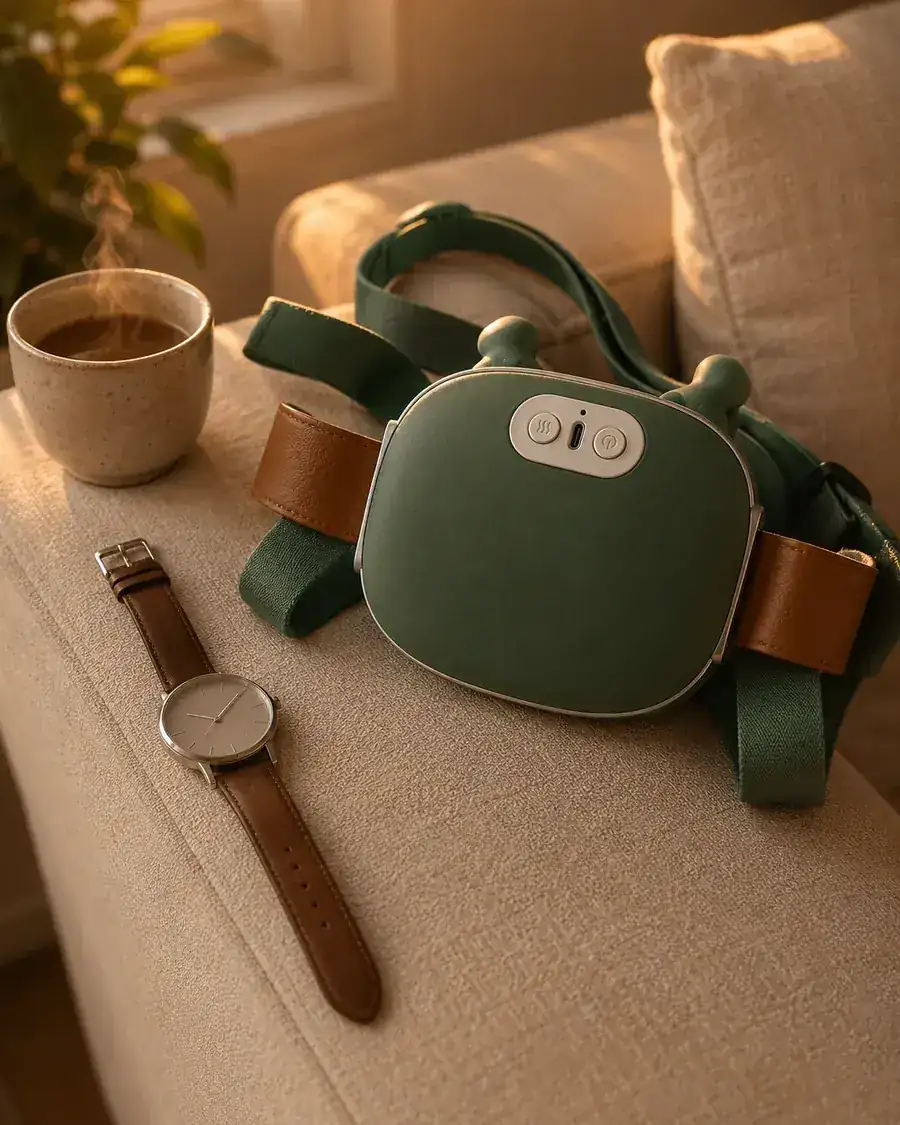
None of this is new advice and all of it outperforms anything you do after the fact. Get the top of the screen roughly level with your eyes, so the head is not pulled forward. Support your forearms, on the desk or on armrests, so the shoulders are not holding the arms up all day. Keep the mouse close rather than out to the side. Feet flat. And get up regularly, which is worth more than the specific chair you get up from.
The order that matters is: movement first, setup second, everything else third. A massager is in the third category, and anyone telling you otherwise is selling one.
Where a device fits into a neck massage at your desk
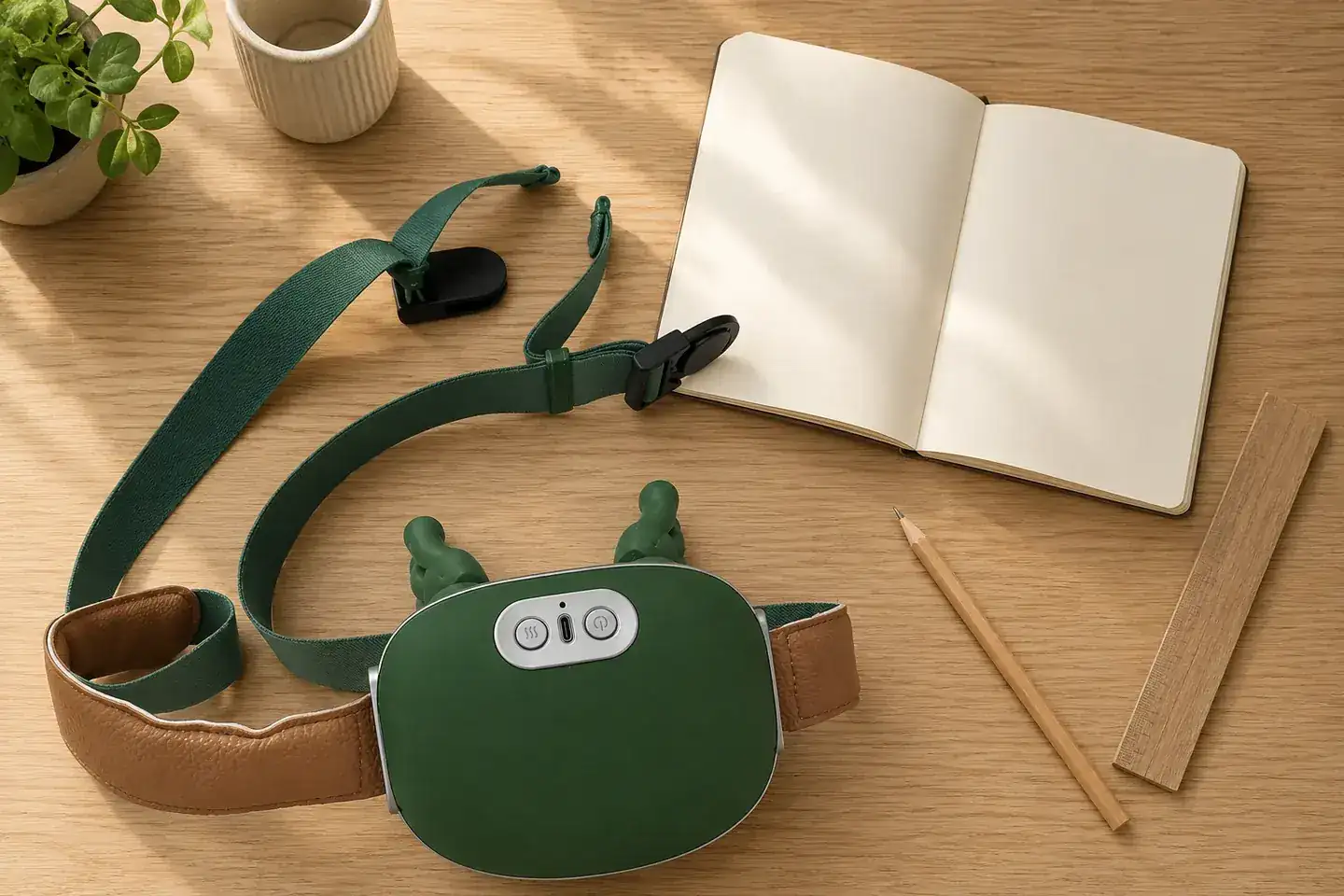
It fits when the three minutes above are not enough on their own, which for a lot of people is any week with long meetings or a long commute. A shoulder-worn device is the shape that works here, because it rests on you and buckles behind, so it can run while you read something. It is not the shape for a shared open-plan desk, and we would not pretend otherwise — it is visible, and it is a device.
Ours runs a ten-minute session and stops on its own, which is roughly the length of a coffee, and it is cordless, so it does not need to be near the socket. It weighs 1.7 lb (760 g), so it lives in a bag reasonably well. The heat has two levels given in the manual as 42 °C (108 °F) and 45 °C (113 °F) and switches independently, which matters in an office that is already warm — the kneading on its own is a perfectly good session.
When to stop and ask someone
Everything above assumes ordinary muscular tightness from sitting still. If the pain is sharp, radiates down an arm, comes with pins and needles or weakness in a hand, or follows an injury, none of this applies and it is a question for a clinician. The manual supplied with our device states plainly that it is a personal care item and cannot replace medication or medical equipment, and the full precautions are in the safety guide.
If the tightness is muscular and it comes back most weeks, the thing that changes it is repetition rather than intensity, which is covered in how often to use a neck massager.